
Menu
Less Road. More Xinjiang.
Xinjiang in Winter: Snow Villages, Blue Ice & a Quiet Kanas
Places, seasons, transfers and practical details to shape your journey.
One-line answer
Snow-draped log villages, frozen lakes turning blue, and almost no crowds — winter turns Xinjiang into a different landscape. Here is what to see, what to wear and how to route it.
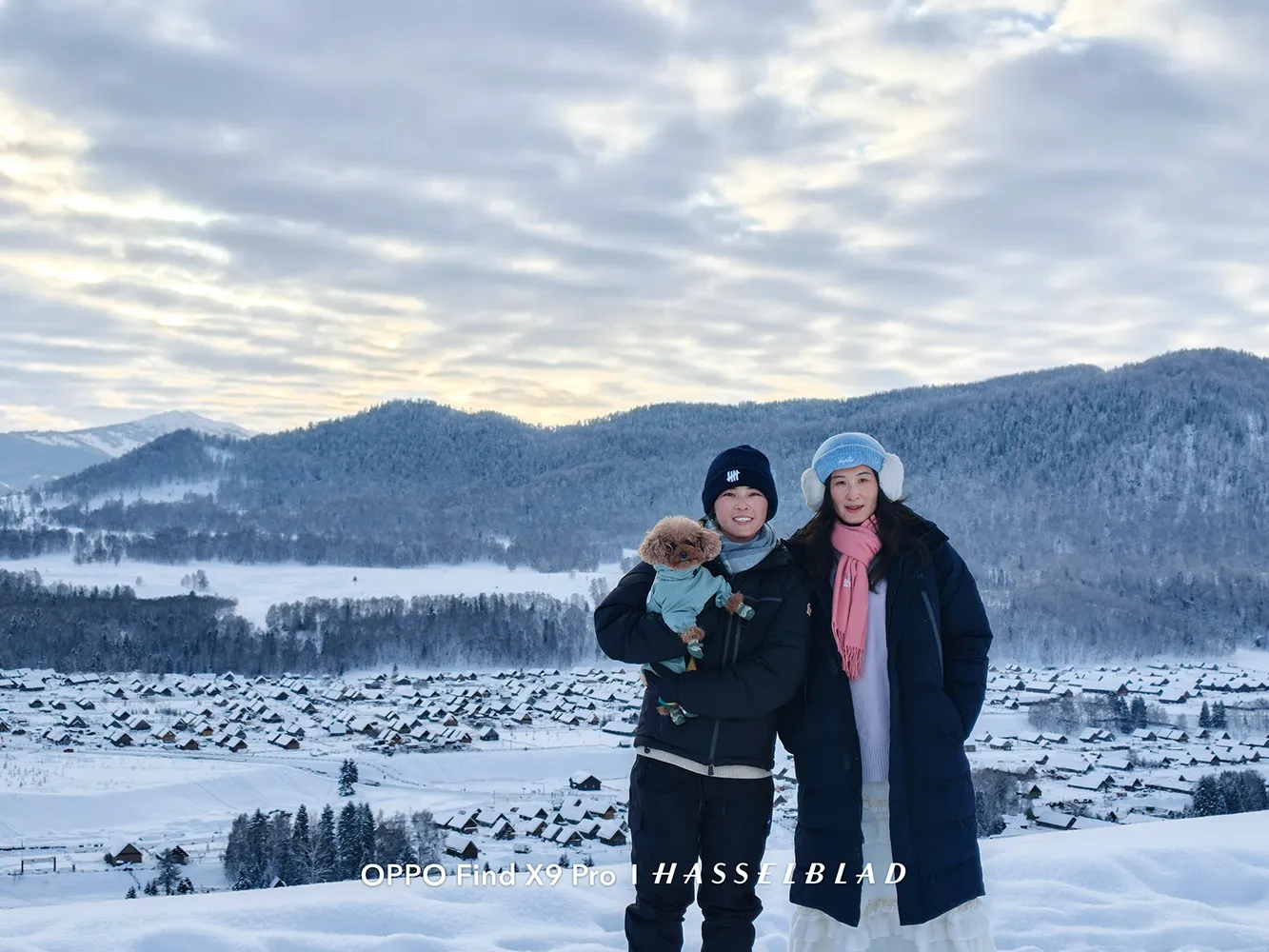
Short answer: a Xinjiang winter is absolutely worth a trip — if you are coming for the snow. In summer Kanas is a turquoise lake with green meadows; in winter it becomes a frozen lake, snow-covered spruce forests and silent Tuwa villages — a completely different landscape. If you dream of green grassland and wildflowers, visit from June to October. If you want thick snow, few crowds and log-cabin chimneys in the evening light, December to February is prime time — and Singapore’s December school holidays fall right inside the snow season.
Kanas and Hemu: stay in the snow villages
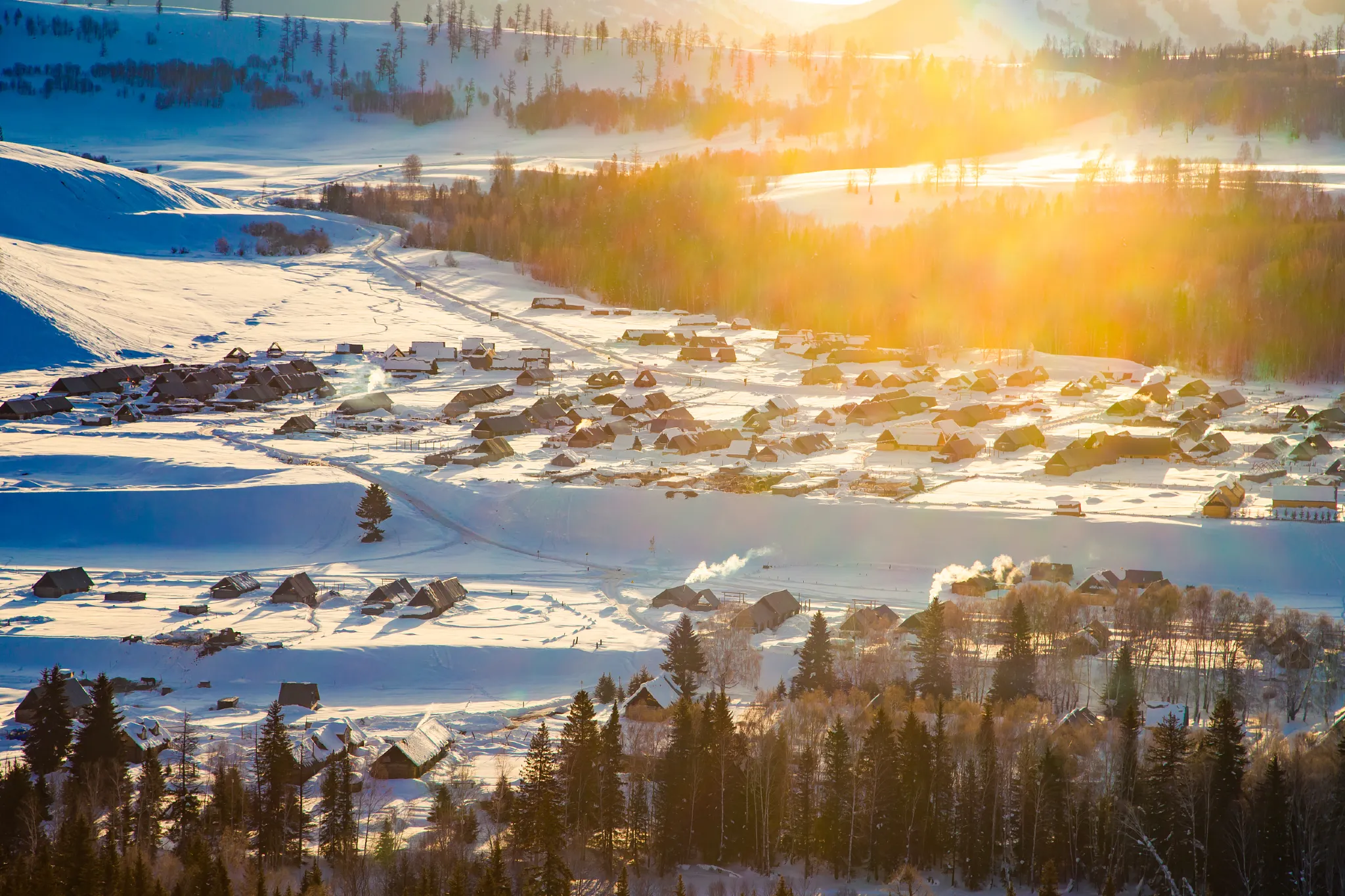
Cabins, snowy forests, river bends and morning light define winter in Altay. In Hemu, enjoy village walks and separately arrange permitted snow activities or Jikepulin skiing when open.
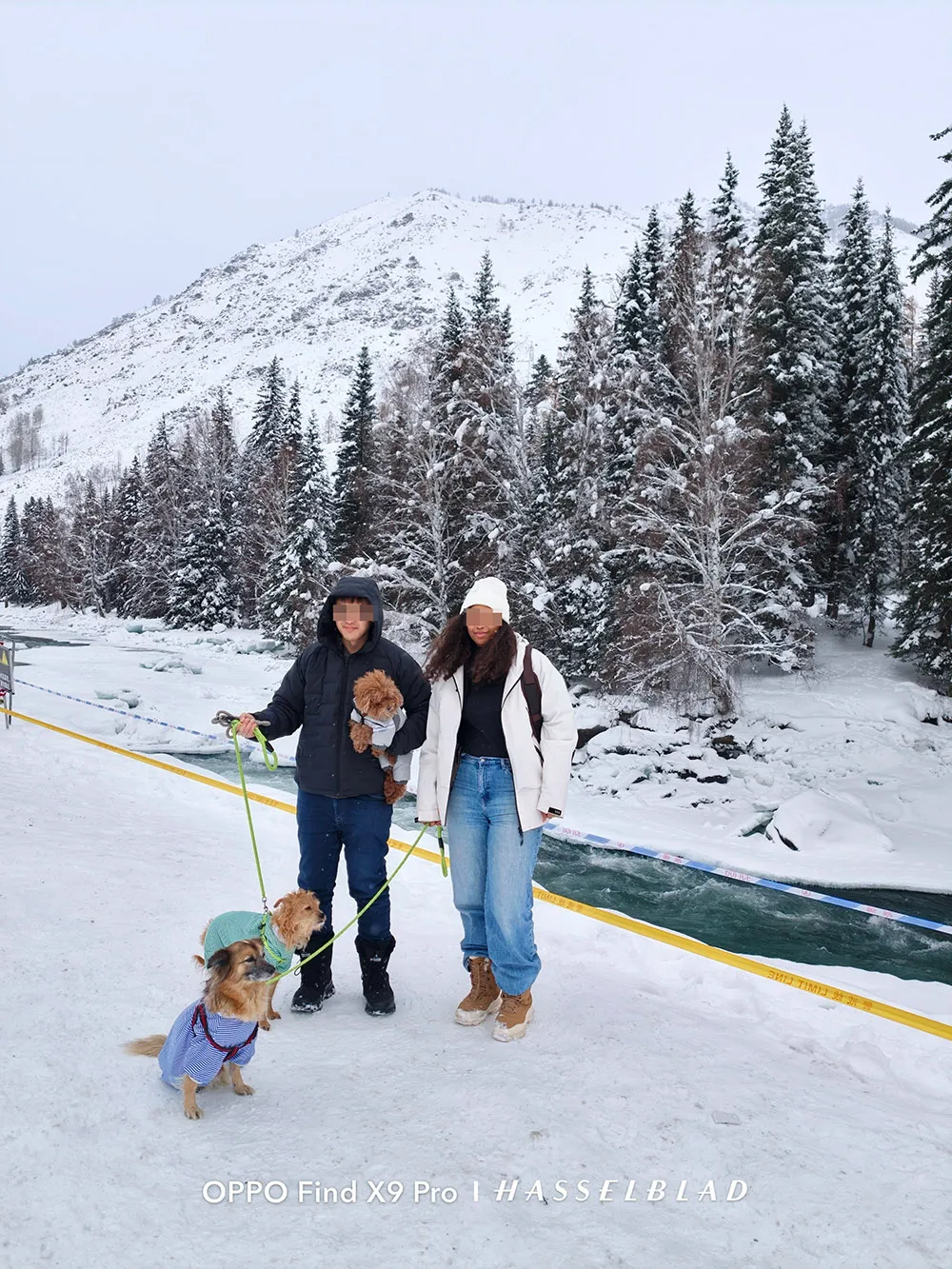
Frozen lakes are not automatically safe walking areas. Do not venture onto ice independently; use authorised activities with qualified operators. Roads and activities depend on weather, and holidays can still be busy.
Sayram Lake in winter
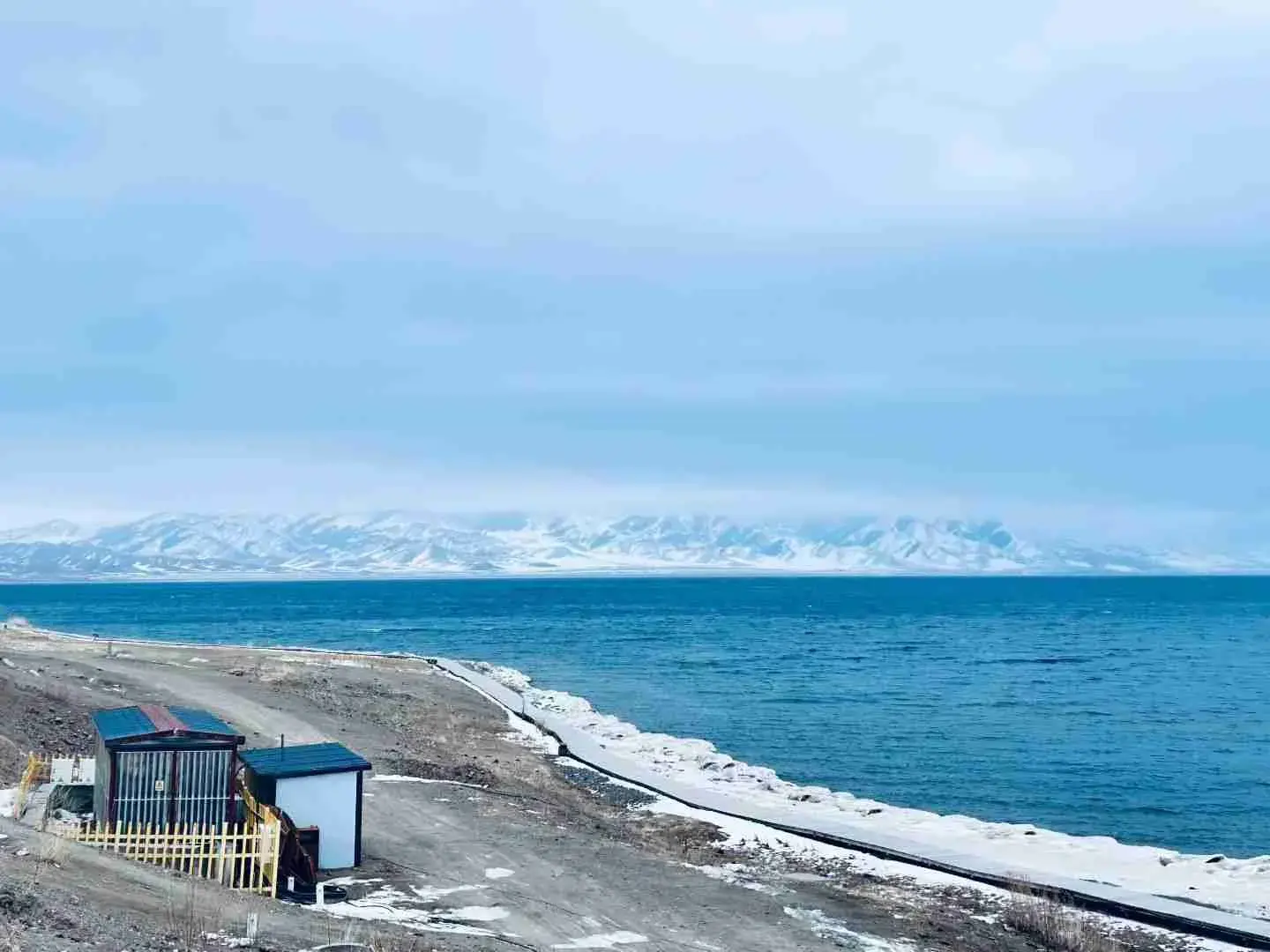
Winter brings snowy mountains and frozen shore scenery. Blue ice, bubbles and ice formations vary with conditions. Stay within open viewing areas; access onto the ice is not a default activity.
Confirm open roads and parking for the day. Winter routes do not include the seasonally closed Duku Highway.
Southern Xinjiang in Winter: A Gentler Cold
If you are worried about the cold, or want culture alongside snow in one trip, consider southern Xinjiang. Kashgar’s winter days usually hover between a few degrees above and a few below zero — far milder than Altay — and the old city’s sunlight, teahouses and roast pigeon remain part of daily life in winter. The Pamir Plateau is colder; Muztagh Ata and Karakul Lake look pristine after fresh snow, but sections of the G314 depend on weather, so any winter drive up to the plateau must be confirmed for road conditions in advance.
Practical advice for Singapore travellers: for a first winter trip, pick the northern Kanas + Hemu combination — the snow density is highest. If you have already seen Xinjiang in summer, or simply prefer milder cold, Kashgar and the Pamir direction works well. To do both, fly between Urumqi and Kashgar instead of spending days on the road.
Temperatures & Packing: A Singapore First-Timer’s Guide to -20°C
Before winter travel, confirm room heating, vehicle equipment and road opening. Take indoor breaks between outdoor activities; warm clothing does not remove cold-weather risks.
The layering that first-time travellers from Singapore most often get wrong: a thermal base layer (not cotton — once it sweats it stays cold), a fleece or wool mid layer, and a windproof, waterproof down jacket on top; thermal leggings plus windproof trousers below. A hat, scarf and gloves are non-negotiable — exposed skin starts to sting within minutes at -20°C. Shoes need to be waterproof, slip-resistant winter boots with thick soles; in Hemu you can also rent snow boots locally. Hand and back warmers help a lot. Indoor-outdoor temperature swings are large, so get into the habit of layering up and down quickly.
Planning a 7–8 day winter trip
Use Urumqi as a connection point, checking flights towards Altay or suitable rail services, followed by winter road transfers to Kanas and Hemu. Rail services are not all high-speed.
Allow two or three nights around Kanas and one or two in Hemu, plus arrival and departure travel. This is an illustrative structure, recalculated for roads, flights, vehicles and accommodation.
Winter travel questions
Is it suitable for children or travellers unused to the cold? Consider health, cold tolerance and outdoor activity levels, with warm indoor breaks and alternatives. Is it cheaper? Holidays, flights, open accommodation and winter vehicles determine the quote; lower prices are not guaranteed.
For the Pamirs and other border areas, share your nationality and intended stops before booking so the team can confirm access, documents and processing time. A permit does not mean every location is open to every traveller.