Private Journeys · Western China
Kanas & Hemu — Two Faces of Northern Xinjiang's Altay Region
Dramatic alpine lakes at Kanas, storybook mist at Hemu — how to choose or combine both for the perfect Altay trip.
One-line answer
One offers dramatic alpine lakes and sweeping mountain views; the other invites you into a storybook village wrapped in morning mist. Here's how to choose — or combine — them for the perfect Altay trip.
Kanas and Hemu sit just a 1.5 to 2-hour drive apart in northern Xinjiang's Altay region, yet they deliver two completely different experiences. Kanas is known for its grand alpine lake and iconic Three Bays; Hemu is all about the mist-draped wooden-cabin village of the Tuwa people. Whether you should visit both depends on how many days you have, your budget, and whether you lean more toward dramatic natural scenery or a quieter, more cultural atmosphere.
Core Differences at a Glance
Kanas — Grand Lakes and Mountain Panoramas
Kanas revolves around three main highlights: Kanas Lake, the Three Bays (Fairy Bay, Moon Bay, and Sleeping Dragon Bay), and the Guanyu Pavilion (Fish-Watching Pavilion) viewpoint. The area brings together alpine peaks, glacial lakes, ancient forests, and open meadows in a single sweeping landscape — layered, dramatic, and visually striking. It's particularly suited to travelers who love epic natural scenery, hiking, and photography. Kanas has been developed for tourism for a longer time, so facilities are relatively well-established. That said, getting around requires multiple transfers on the park shuttle bus, which can be physically draining over a full day — plan to take your time and pace yourself.
Hemu — An Immersive Slow-Paced Village Escape
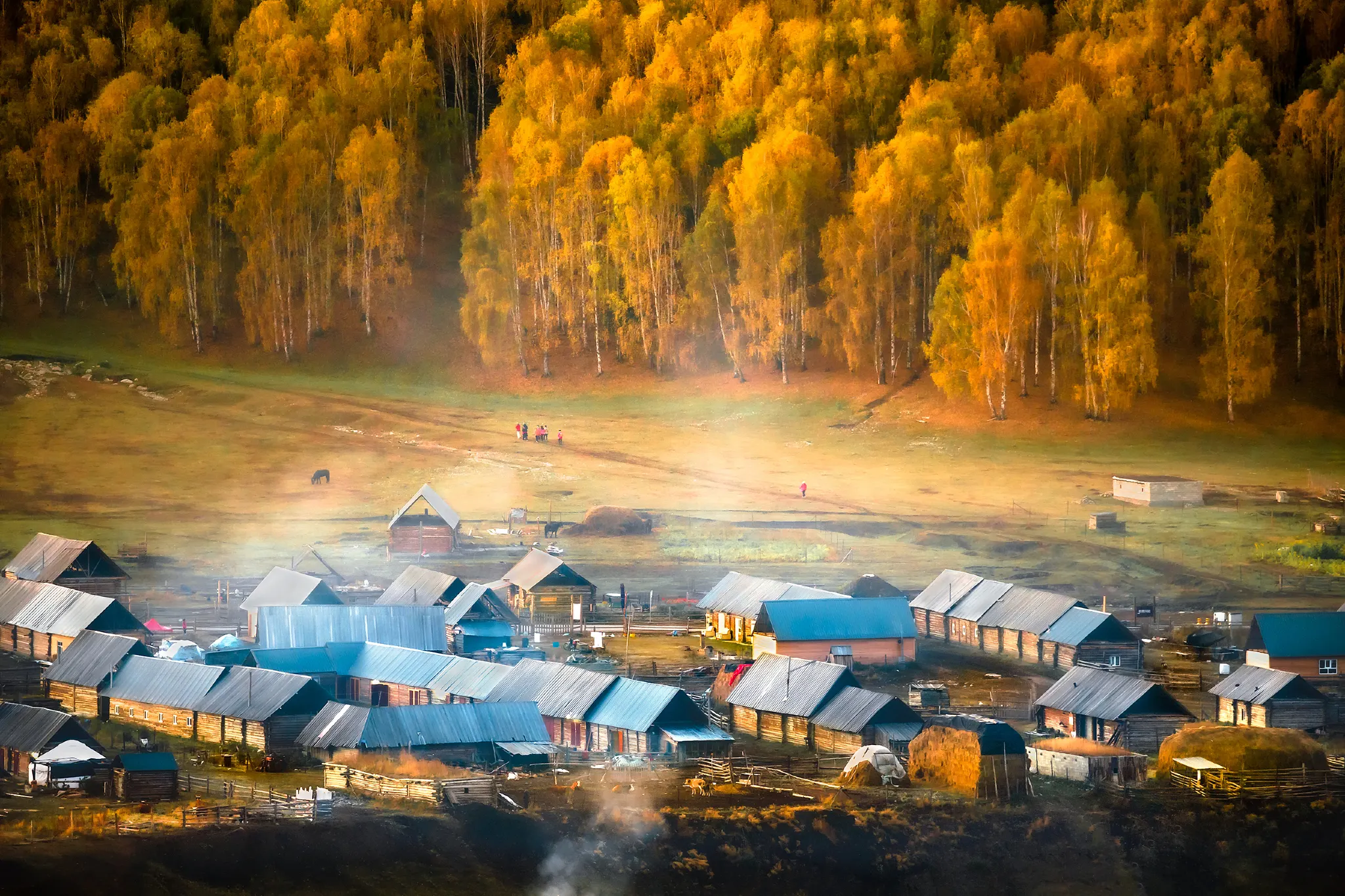
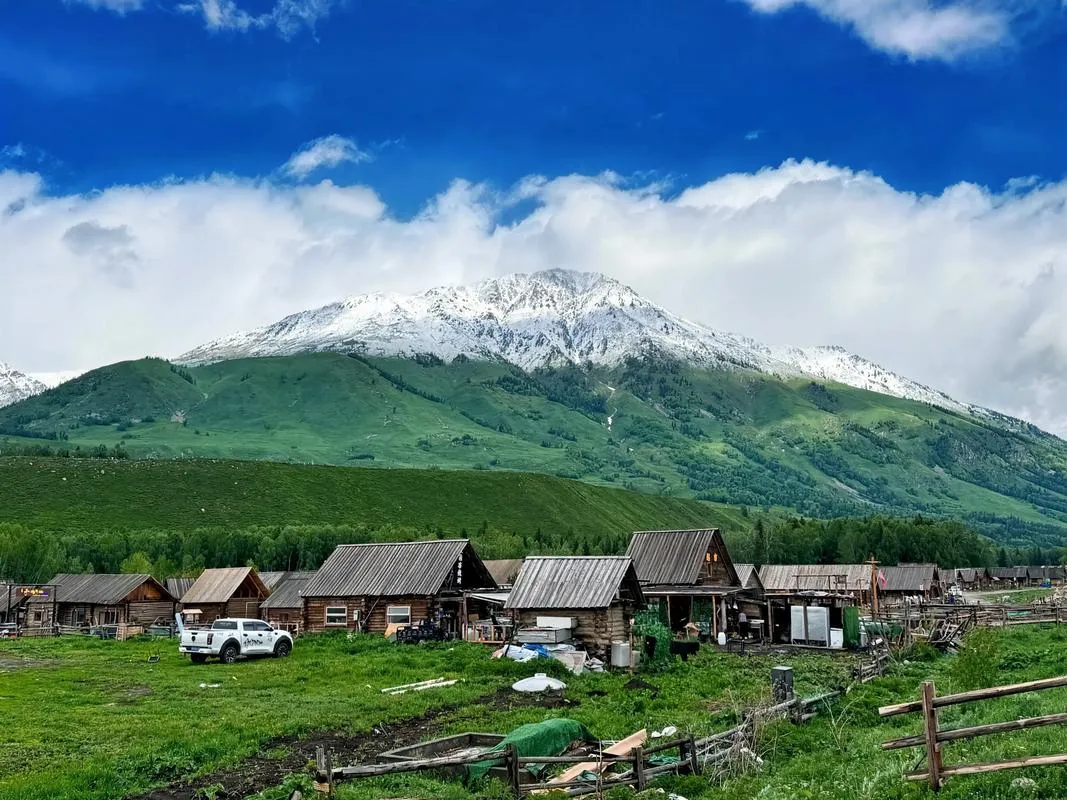
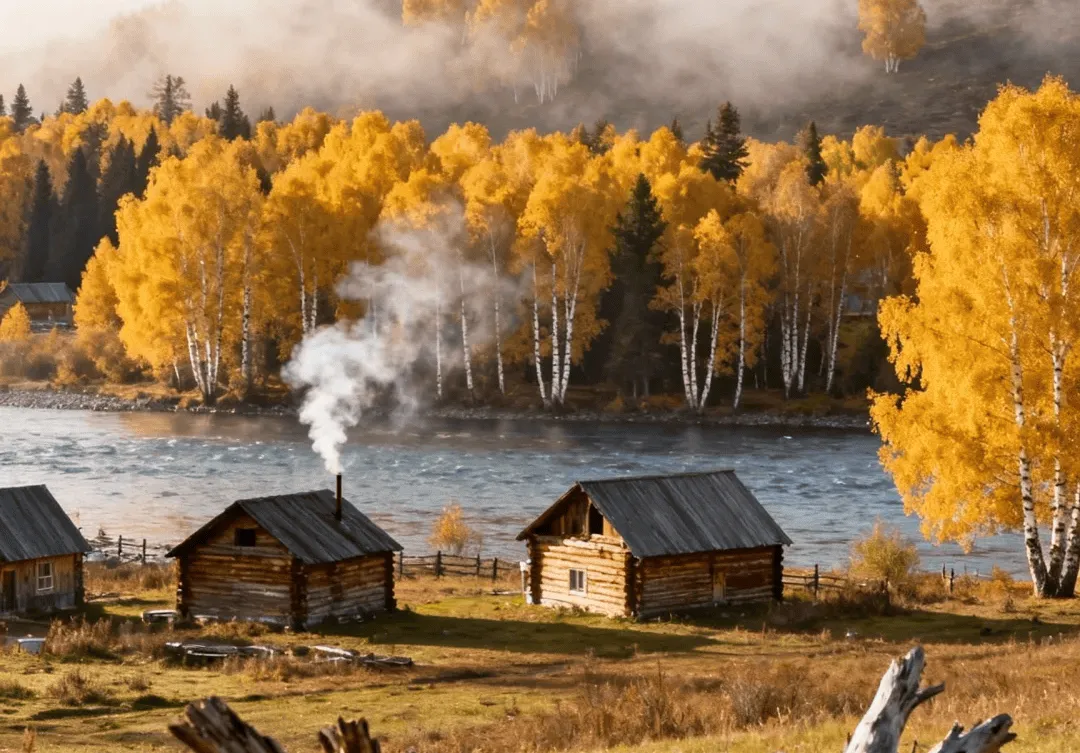
The soul of Hemu lies in its cluster of traditional wooden cabins, where the Tuwa people have lived for generations, the birch forests that blanket the surrounding hills, and the soft morning mist that fills the valley at dawn. The right way to experience Hemu is slow: sit in a cabin courtyard with a cup of tea, climb up to the viewing platform before sunrise to watch the mist lift, and catch the wisps of smoke rising from cabin roofs at dusk. The place has an almost fairy-tale quality that photographs beautifully. A heads-up, though: Hemu has become noticeably more commercialized in recent years, and prices for lodging and food during peak season can be steep. The scenery, while charming, is relatively simple — mostly pastoral landscapes and village atmosphere rather than diverse natural wonders.
Which to Choose, Based on Your Trip
If you have enough time (visit both — highly recommended)
If your Altay itinerary runs five days or longer, I'd strongly suggest doing both. Kanas and Hemu aren't an either-or proposition — they complement each other beautifully. Kanas gives you raw natural spectacle; Hemu gives you a slower, almost retreat-like rhythm. A classic itinerary looks like this: spend 1 to 2 nights in Hemu first (catch the mist at sunrise, wander through the birch groves during the day, photograph the village at sunset), then head to Kanas for 2 nights (climb Guanyu Pavilion for the full lake panorama, hike the boardwalk trails along the Three Bays). If you still have extra time, continue from Kanas to Baihaba — a quiet border village on the frontier with Kazakhstan, even more rustic and peaceful than Hemu, and known as "the First Village of Northwest China."
If you're short on time (pick Kanas)
With only 2 to 3 days to spare, go with Kanas without hesitation. Kanas packs a far greater variety of landscapes into a compact area — you can see the lake, the bays, and the mountain viewpoints all within a single day. Many travelers who've visited both say Kanas feels more diverse and more visually stunning, and that with limited time, missing Hemu — where commercialization has become more noticeable — is no great loss.
If you prefer a slow pace (pick Hemu)
If you're less driven by a need to see grand, sweeping vistas and care more about the feeling of slowing down — the charm of staying in a wooden cabin, losing yourself in the morning mist, capturing atmospheric photos — then go straight to Hemu. Settle in for two unhurried nights. Don't rush to tick off sights. Doing nothing in particular is, in many ways, the ideal way to experience Hemu.
Practical Tips to Avoid Pitfalls
Accommodation: Lodging inside both scenic areas is generally expensive and fairly basic. In Kanas, the old village is close to the lake but has older, simpler facilities; the new village has better conditions but is a bit farther out. In Hemu, the old village is lively and convenient but can be noisy; the new village is quieter and more comfortable but sits farther from the main viewpoints. During peak season — especially autumn — prices can double or more, so book well in advance. Last-minute options are scarce and costly.
Transportation: Private cars can only be parked at the visitor centers outside the scenic areas. You must switch to the park shuttle bus to enter — this is standard practice across most major scenic spots in northern Xinjiang. At Kanas, shuttle bus queues during peak season can be long, so aim to arrive early and avoid the busiest window from 9 a.m. to 11 a.m.
Prices: Food inside both scenic areas is not cheap. A simple plate of laghman noodles or pilaf can cost two to three times what you'd pay outside. It's a good idea to pick up snacks, fruit, and bottled water in Burqin or Jiadengyu before you head in — it saves money and is far more convenient.
Weather: The weather in the Altay mountains is notoriously fickle — sunny one moment, raining the next, with wide temperature swings between day and night. On overcast, rainy, or foggy days, you may not be able to see the lake at all from Guanyu Pavilion. It's wise to build half a day to a full day of flexibility into your itinerary. Waiting for clear weather before heading up makes all the difference — the view on a good day is on an entirely different level.
Autumn at Kanas & Hemu: When to Go
Mid-September to early October is the peak for autumn colours and morning mist: turquoise water framed by golden forest at Kanas, and cabin rooftops rising from mist at Hemu. The peak-season ticket is about ¥185 including the shuttle, and lodging inside the scenic areas should be booked at least a month ahead.
Early October can still be colourful, but after mid-October the leaves drop quickly and mornings can approach freezing — confirm park and road access before you go.
The Hemu sunrise viewpoint is the classic shot: arrive before dawn and dress warmly. At Kanas, time Guanyu Pavilion for a clear-weather day — fog can hide the lake entirely.
Want to turn this guide into your own route?
Send us your month, group size and preferred pacing. We can turn this guide into a route that fits your real trip.