Private Journeys · Western China
Dunhuang: A City Story on the Silk Road
An art treasury unmatched anywhere in the world.
One-line answer
Dunhuang sits at the far western end of the Hexi Corridor in Gansu Province, China. For centuries it was the most prosperous trading hub on the ancient Silk Road, where caravans, monks, and travelers converged — and where Eastern and Western civilizations met and blended, leaving behind an art treasury unmatched anywhere in the world.
A Brief History
In the 2nd century BC, Emperor Wu of the Han Dynasty established Dunhuang as a strategic Silk Road outpost. Then, in 366 AD, a wandering monk named Le Zun witnessed a vision of a thousand golden Buddhas gleaming on a cliff face — and carved the very first Mogao cave. Over ten dynasties and nearly a thousand years, the site grew into a Buddhist art sanctuary of 735 caves, 45,000 square meters of murals, and over 2,000 painted sculptures.
In 1900, a Taoist priest named Wang Yuanlu accidentally discovered a hidden library cave sealed for nearly a millennium, containing over 50,000 manuscripts. While much of this treasure was tragically scattered abroad, today Dunhuang — a UNESCO World Heritage site — welcomes visitors from across the globe.
Must-See Highlights
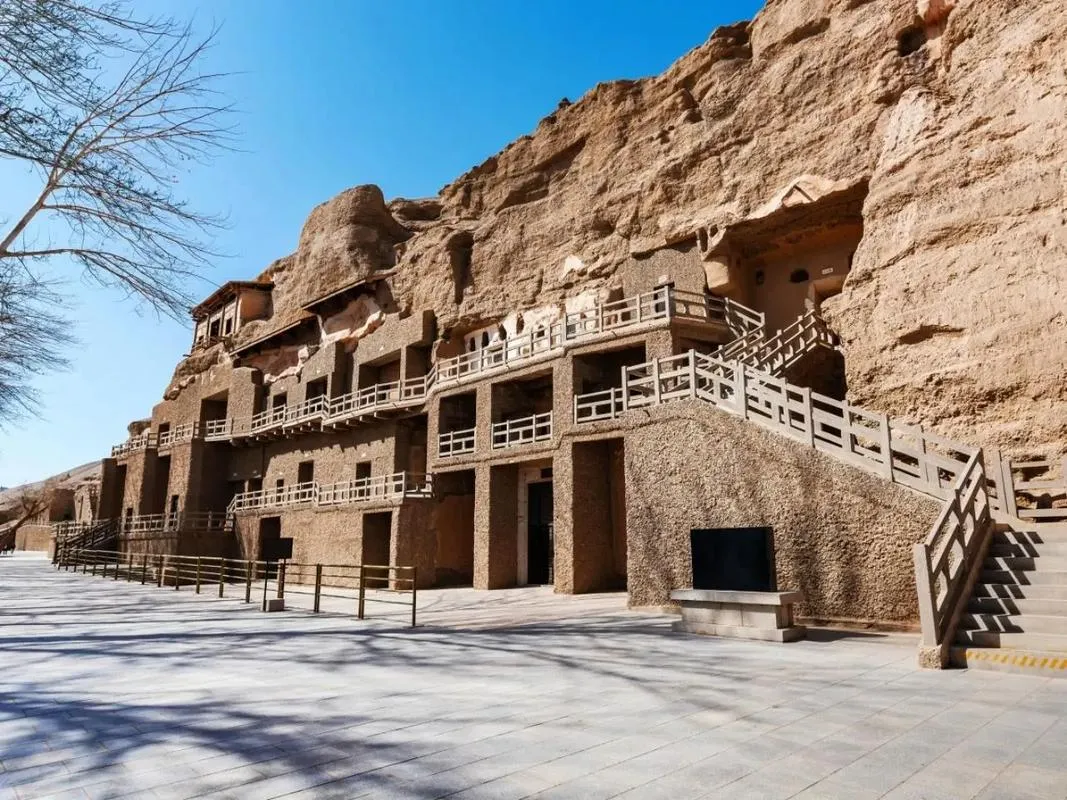
The one reason most people come to Dunhuang. Start with two immersive digital films, then board a shuttle to the caves, where expert guides lead you through eight representative grottoes (peak-season regular ticket: ¥238). The iconic nine-story pagoda houses a 35.5-meter seated Buddha, and every cave's murals will leave you breathless. Book early at the official site (www.mgk.org.cn) — only 6,000 tickets per day in peak season.
The top reason anyone comes to Dunhuang. Start with two immersive digital films, then take the shuttle to the cave zone, where a professional guide leads you through eight representative grottoes (peak-season standard ticket ¥238 per person). The iconic Nine-Story Pagoda houses a 35.5-meter seated Maitreya Buddha, and the murals in every cave are breathtaking. Book in advance with your real name on the official site (www.mgk.org.cn) — peak season caps at 6,000 tickets a day, so reserve about a month ahead.
Mingsha Sand Dunes & Crescent Moon Spring
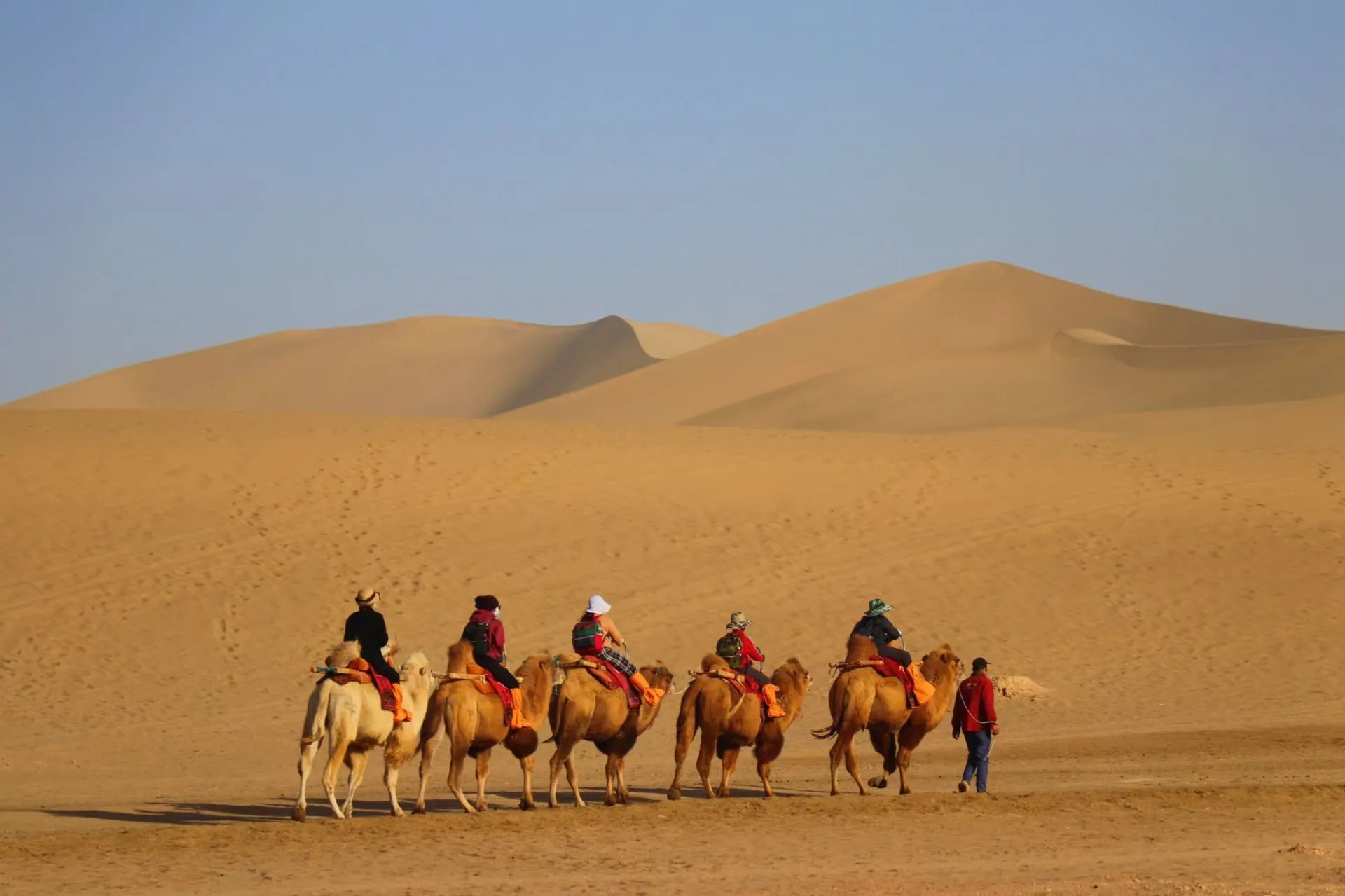
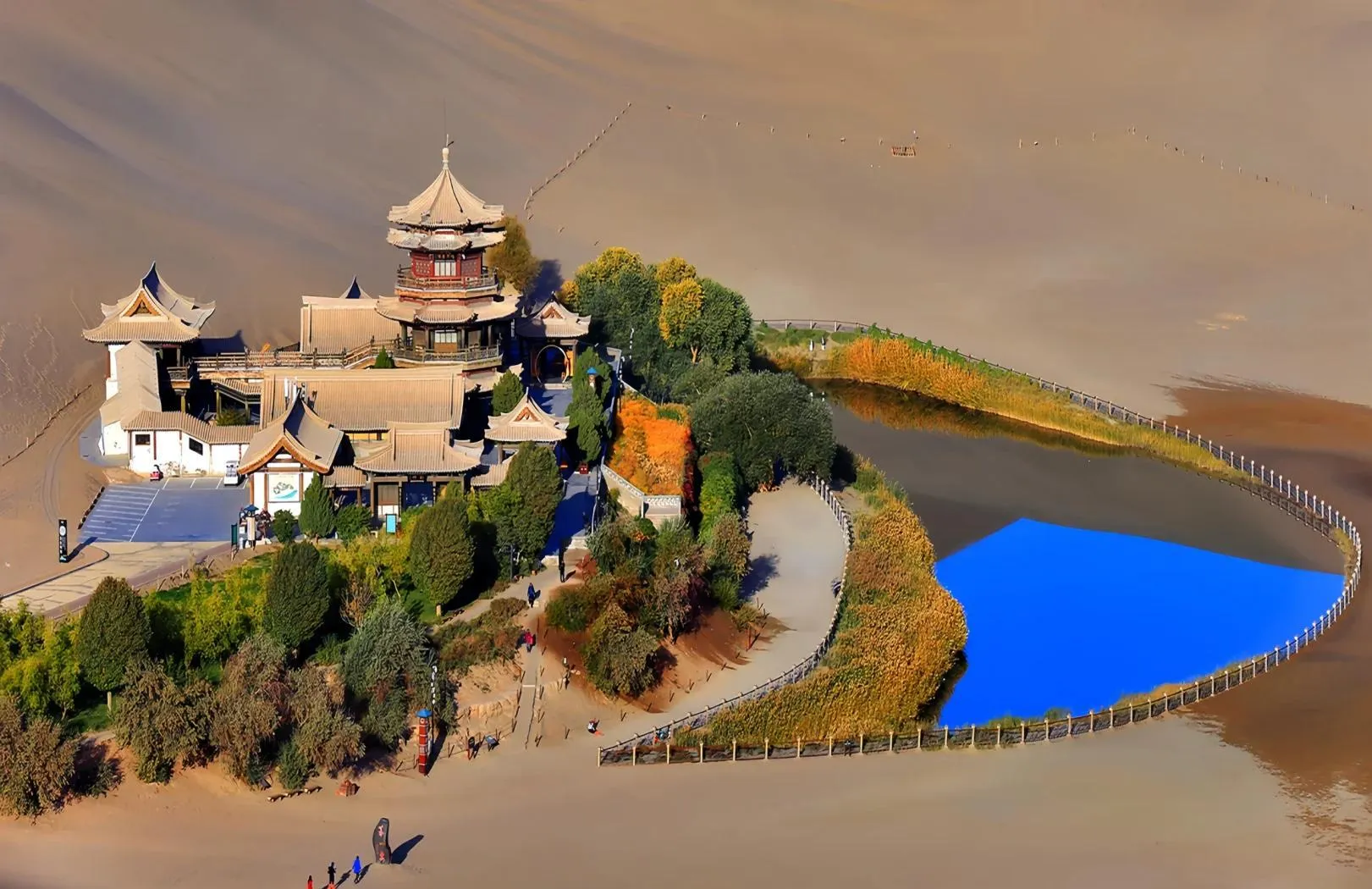
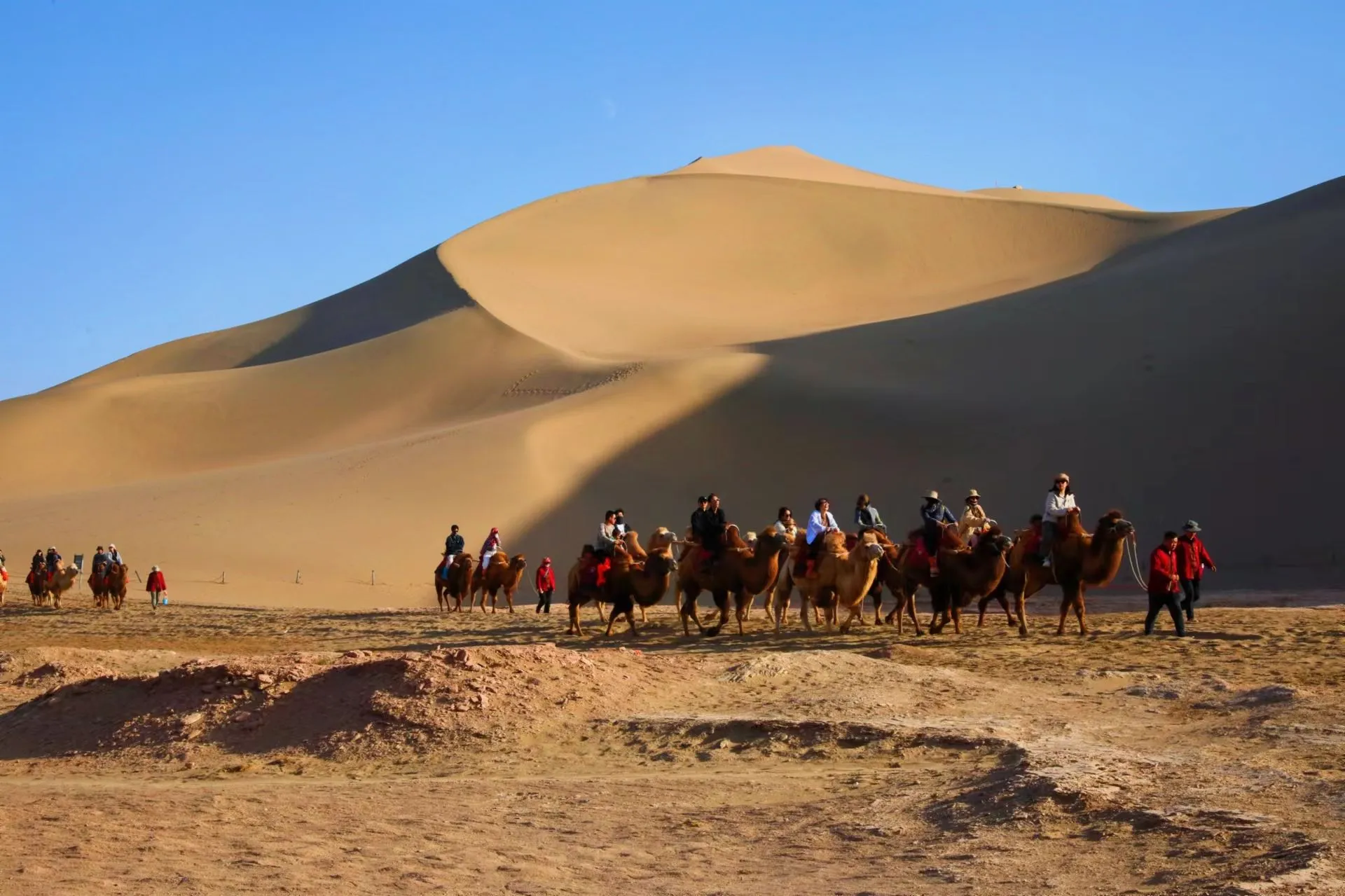
Golden dunes ripple as far as the eye can see, cradling a crescent-shaped spring that hasn't dried up in a thousand years. Ride a camel (≈¥100), sandboard down the slopes, or climb a dune for the sunset — it's pure magic. The ticket is valid for three days, so come back for sunset whenever you like.
Yumen Pass & Yardang Geopark
Beyond this pass the spring wind never blows — the crumbling ruins of Yumen Pass stand alone in the vast Gobi, hauntingly beautiful. Pair it with Yardang Geopark, where wind-eroded rock formations twist into castle-like shapes, and the "Ghost City" glows gold at sunset.
Travel Smart
September–October is the golden window — cool, clear, and the melons are sweet. May–June is good too. Midsummer is scorching (35°C+), and spring brings sandstorms. Year-round, temperatures can swing over 15°C in a day — always pack a warm layer.
The UV is no joke here. High-SPF sunscreen, a wide-brim hat, and sunglasses are essential. Carry water with you at all times — at least 2–4 bottles per person. The Mogao cave complex involves considerable walking, so wear your most comfortable shoes.
Absolutely no photos or touching inside Mogao caves — body heat and flash will damage thousand-year-old murals. Stay with your guide and keep your voice low. No selfie sticks on camels. Drones must be pre-registered with the scenic area.
The city is compact — a 20-minute taxi gets you to Mingsha Dunes. Mogao is ~25 km from town; you must first reach the Digital Center, then take the park shuttle. Western-route sites are far apart, so hiring a car with A/C is the most practical choice.
Want to turn this guide into your own route?
Send us your month, group size and preferred pacing. We can turn this guide into a route that fits your real trip.