Private Journeys · Western China
Kashgar: A City Story on the Silk Road
Where the Silk Road Still Breathes
One-line answer
Kashgar, at China's far western edge, is one of the Silk Road's most stirring names. For over two millennia, it has been the crossroads of East and West — over the Pamirs lies Central Asia, and eastward along the edge of the Taklamakan Desert stretches the route to the Chinese heartland. Today, Kashgar may be the only city in China where you can still feel the ancient Silk Road pulse through everyday life: coppersmiths hammering handcrafted wares in ochre-walled alleys, Uyghur elders strumming the rawap and singing timeless muqam melodies in tea houses, the air permanently laced with the scent of baked samsa and cumin. Here, history isn't sealed in a museum — it flows through the streets, every single day.
A Brief History
Kashgar's recorded history stretches back to the 2nd century BC, when Zhang Qian, China's great Silk Road explorer, documented the city then known as "Shule" — the gateway from the Tarim Basin into Central Asia, where caravans converged and camel bells mingled. In the 10th century, the Karakhanid dynasty made it their capital, and Islamic culture took root. By the medieval era, Kashgar was one of Central Asia's most prosperous trading hubs — silk, tea, jade, and spices changed hands, while Persian merchants, Indian monks, and Turkic nomads brushed shoulders in its bazaars. Under the Qing Dynasty's Qianlong Emperor, Kashgar was formally integrated into China. Today it is both a National Historic and Cultural City and a frontline window of the Belt and Road Initiative — and between its old-city mudbrick walls and the distant Pamir snow peaks, two millennia of stories continue to unfold.
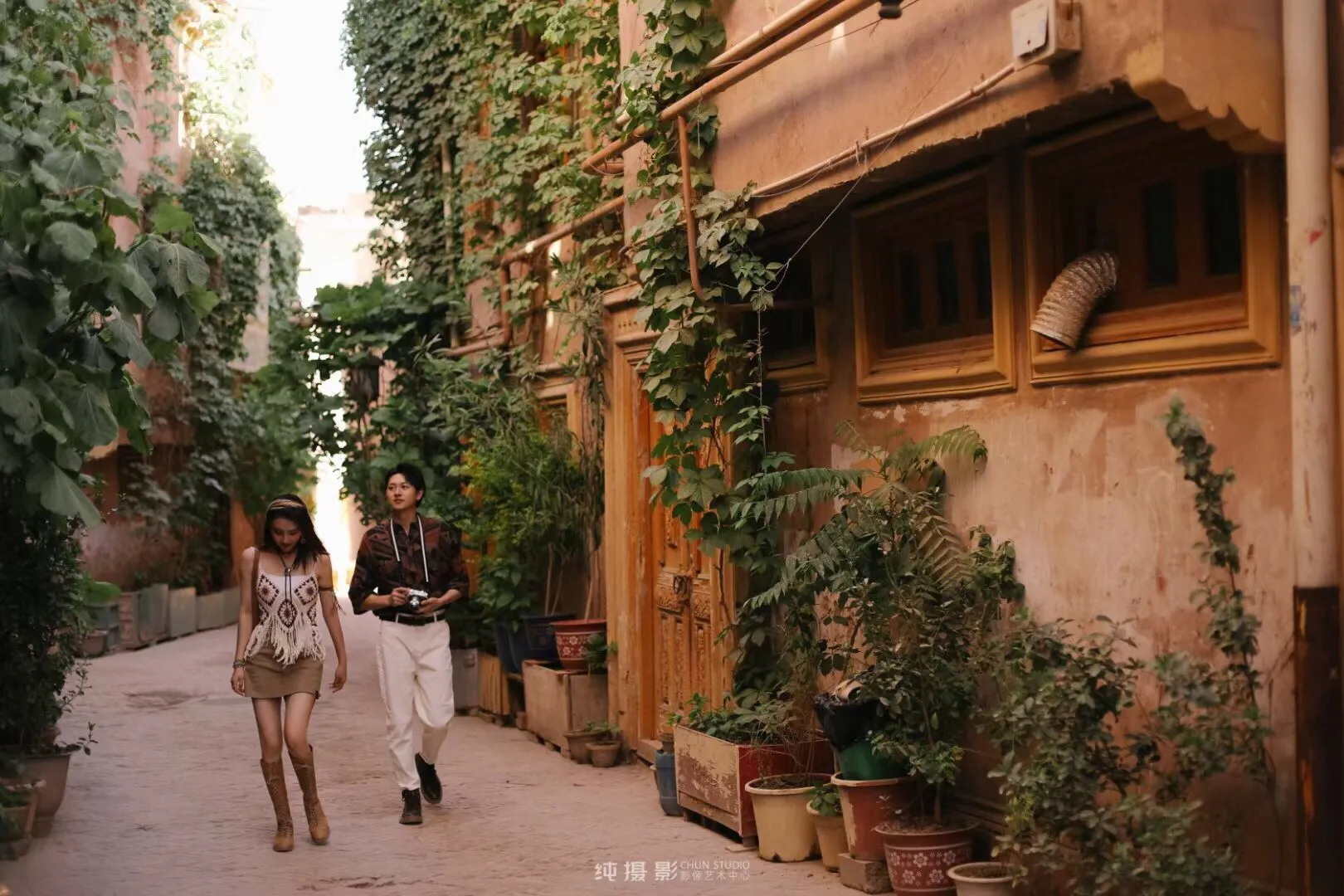
Kashgar Old City
This is the soul of Kashgar — the place you should dive straight into and not hurry to leave.
The entire old city is a labyrinth of ochre-colored rammed-earth architecture, its winding alleys home to generations of Uyghur families. Unlike gated, ticketed "old towns" elsewhere, Kashgar's is alive — children kick footballs through the lanes, housewives sprinkle water to settle the dust, and the clang of coppersmiths' hammers rings from dawn to dusk. The most captivating details are the brilliantly painted carved wooden doors and window frames, and grapevines spilling over courtyard walls — every random alley begs for a photograph.
A few stops deserve special mention: the Century-Old Tea House, where a pot of rose tea and a piece of naan on the second-floor balcony will reward you with the sight of local elders gathered in song, time itself seeming to slow by a full century. Zhiren Bazaar (the craftsmen's market), where you can watch coppersmiths, woodcarvers, and potters at work up close — a handmade Yingjisha knife or a Kashgar clay bowl makes a far better souvenir than anything mass-produced. And if you're here on a Sunday, do not miss the Livestock Bazaar on the city's outskirts: thousands of sheep traded on a dusty open plain, deals sealed with handshakes and the ancient sleeve-covering bargaining gesture still in use — this is Kashgar at its rawest and most real.
A free city-gate opening ceremony with lively ethnic song and dance starts at 10:30 every morning at the East Gate — arrive 15 minutes early for a good spot.
Id Kah Mosque
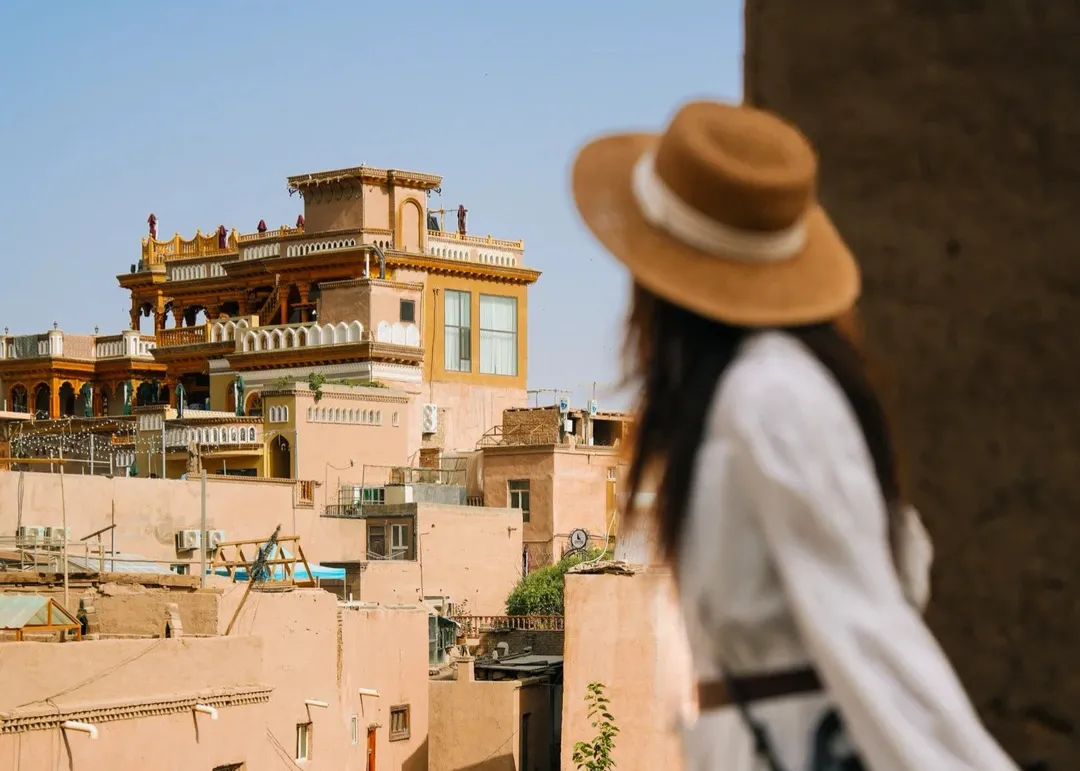
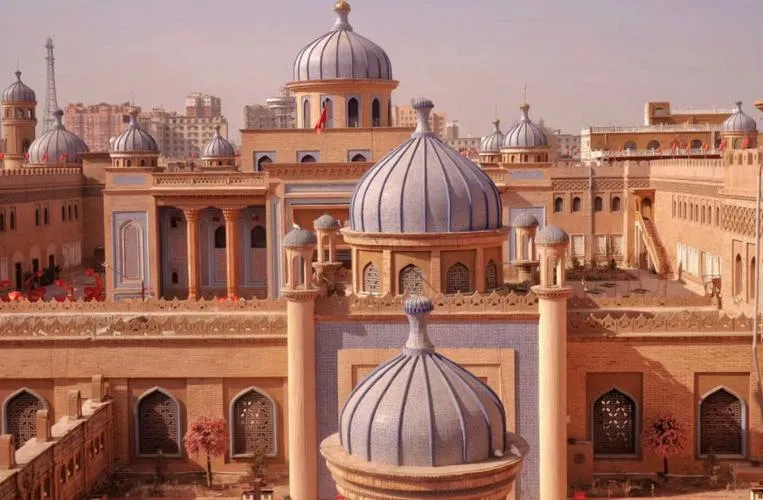
At the very heart of the old city, Id Kah is one of China's largest mosques. Its ochre gatehouse and white dome stand serene against Kashgar's piercing blue sky. Outside of prayer times, visitors can enter with a ticket (about ¥20) — the courtyard's poplar trees rise tall and straight, the stone paths worn glossy by time. If your visit coincides with Friday Jummah prayers, the sight of thousands gathered in unison is deeply moving — even watching quietly from the square outside, you'll feel the weight of faith in this city.
The Pamir Plateau/White Sand Lake
About two and a half hours out of Kashgar, the road rounds a bend and Baisha Lake slams into view — nobody makes it past this moment without gasping. Silvery-white sand mountains rise before you like an ink-wash painting, their feet lapped by impossibly blue, Tiffany-tinted water. The North Shore has a proper viewing platform (about ¥40 entry); light is softest before 10 a.m. Alternatively, navigate toward Muji Township and approach from the south side — fewer people, wilder scenery, and you can walk right down to the water. One warning: the wind here is ferocious enough to strip away anything not tied down. Bring a hat with a chin strap.
Karakul Lake & Muztagh Ata
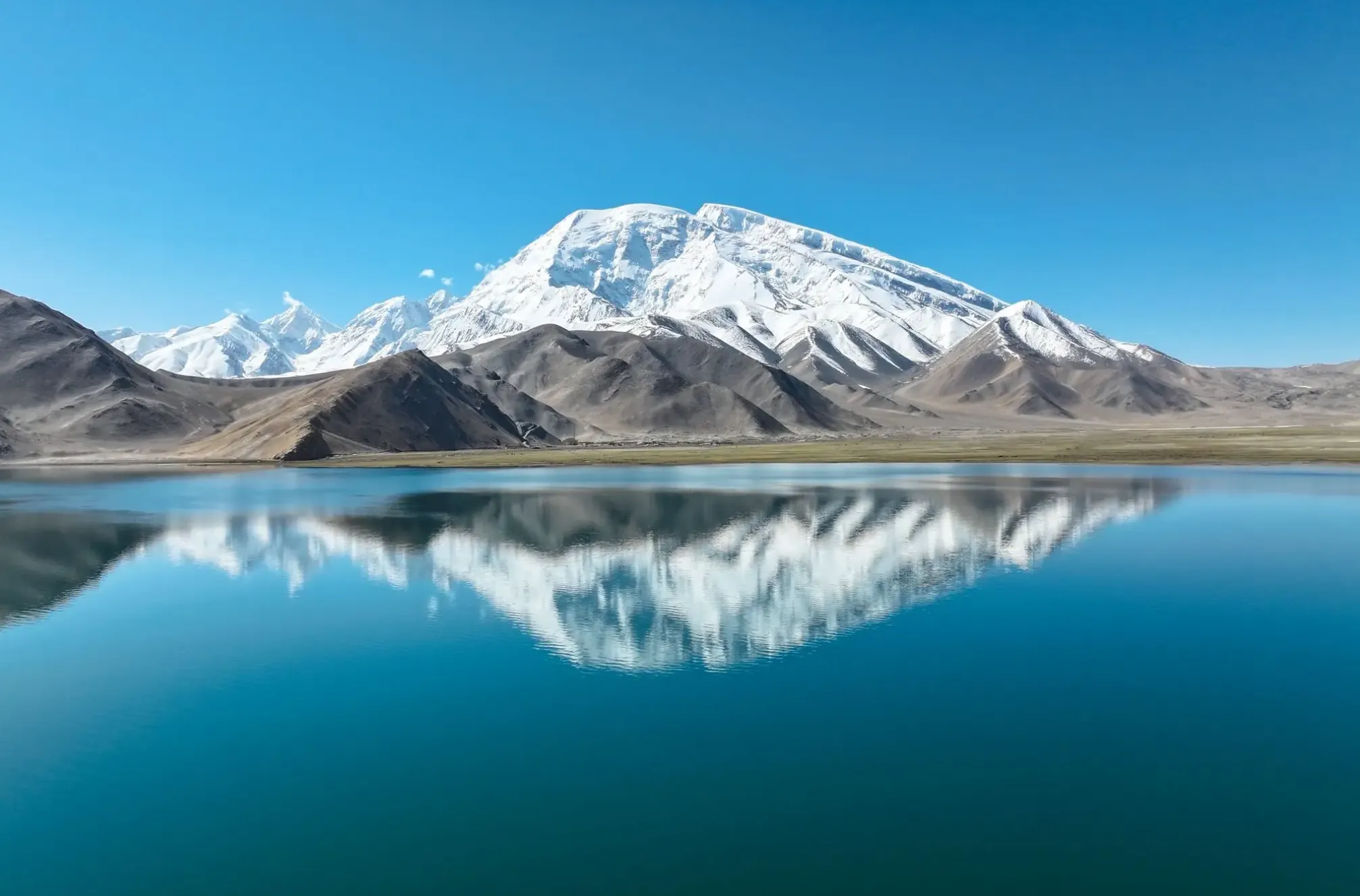
Continue south from Baisha Lake as the elevation climbs past 3,600 meters. Karakul Lake appears on the right side of the road — and across it rises Muztagh Ata, the "Father of Glaciers," at 7,546 meters. Perpetually snow-capped, its massive, dignified form stands like a silent giant guarding the Pamirs. The lake is a deep, dark blue, and on calm days, the reflections of Muztagh Ata and Kongur Tiube are so perfect you can barely tell mountain from mirror. Ride a horse closer to the glacier's foot (about ¥50) or simply sit quietly by the prayer flags — the air is thin, your heartbeat slows, and the world grows very still.
This is the highest-altitude stop on the route. Above 3,600 meters, altitude sickness becomes a real risk — avoid strenuous activity and keep chocolate or cola handy in the car.
Taxkorgan
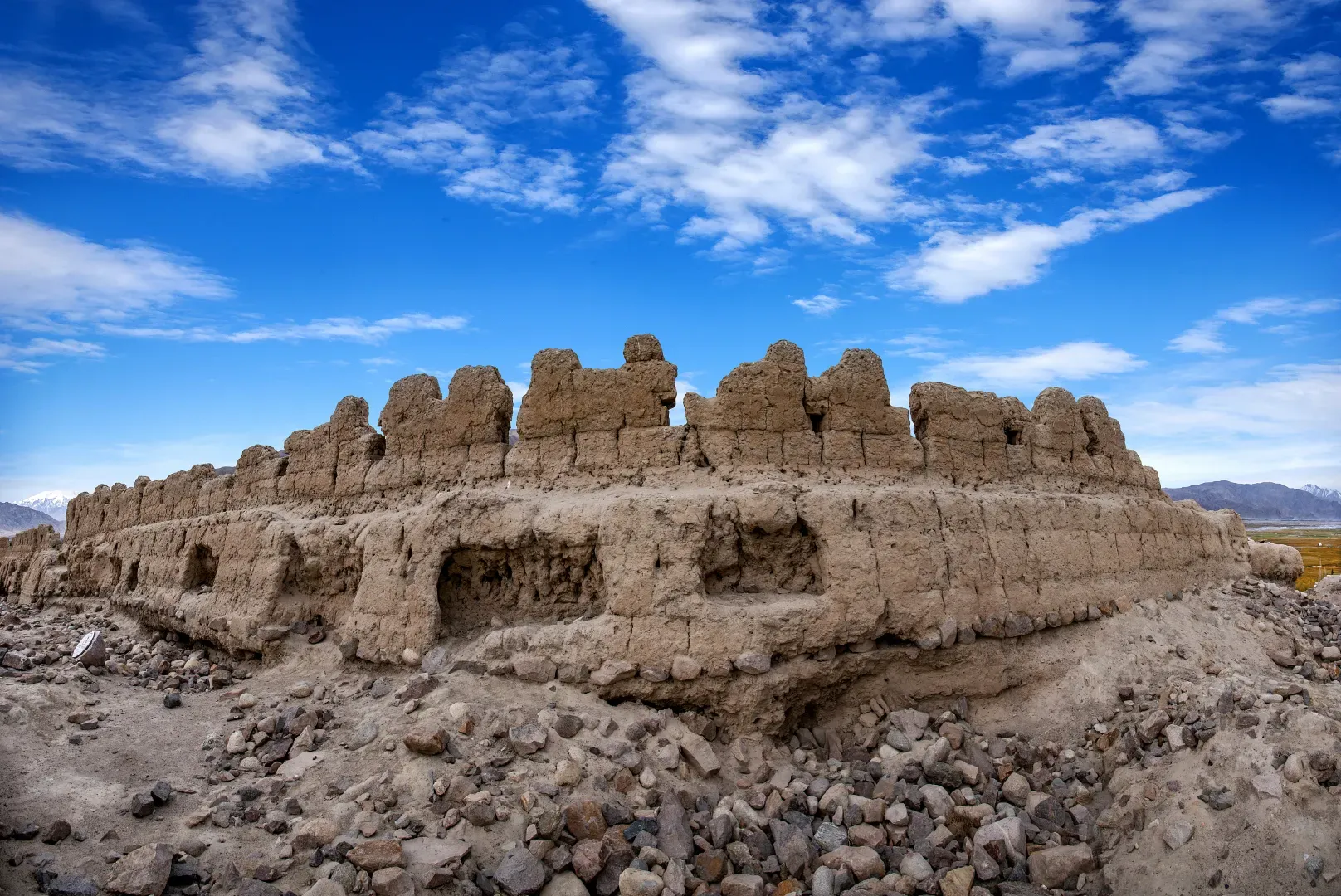
Taxkorgan is the endpoint and overnight stop of the Pamir journey, at roughly 3,100 meters above sea level. This small border town is predominantly inhabited by the Tajik people — China's only ethnic group of Caucasian origin. The eagle is their cultural totem, and when Tajik men perform the Eagle Dance, their outstretched arms truly evoke a bird of prey in flight. The town itself is modest, but two sights stand out: Stone City ruins, a fortress that has stood for over two millennia — morning sunlight on its crumbling ramparts, with the winding streams of Golden Grassland in the distance, is a scene of haunting, desolate beauty (entry plus shuttle, about ¥90). Golden Grassland lies right below Stone City; follow the boardwalk to the end for that classic shot of meandering waterways reflecting snow peaks.
Travel Smart
Spring (April–May) and autumn (September–October) are Kashgar's sweet spots — mild temperatures (15–25°C), piercing blue skies, and ochre alleys glowing in golden sunlight. Summer (July–August) is hot in the city proper, but the Pamir Plateau stays cool — perfect for escaping the heat. Winter (December–February) cloaks the Pamirs in pristine snow, though Taxkorgan can plunge below -20°C. Late March to early April brings apricot blossoms to the Pamir valleys, transforming the Tasha Ancient Road into a dreamscape.
You must have a border permit to enter Taxkorgan — this is non-negotiable; checkpoints will turn you back without one. Get it free at your local Public Security Bureau before traveling, or in Kashgar itself at the border permit office (navigate to "Kashgar International RV Camp"); bring your ID card, and it's usually processed the same day. Strong recommendation: get it in your hometown before departure — it saves time and stress.
The Pamir route climbs from 1,300 meters at Kashgar to 4,100 meters at Panlong's peak. Taxkorgan sits around 3,100 meters — mild altitude symptoms (headache, shortness of breath) are normal. Get good sleep in the days before departure, avoid alcohol and overeating on the day you head up the plateau, and keep portable oxygen canisters, chocolate, and cola in the car. The wind at Baisha Lake is legendary — a windbreaker and a chin-strapped hat are essential.
Day-night temperature swings are significant in Kashgar. Spring and autumn call for the onion method (T-shirt + light layer + windbreaker). On the Pamirs, even in midsummer, pack a light down jacket or shell — once the sun drops, temperatures follow fast. Sunglasses and high-SPF sunscreen are year-round essentials;the plateau's UV is merciless.
Kashgar is Xinjiang's culinary heavyweight. Samsa (oven-fresh thin-skinned lamb pies that burst with juice), polo, roast pigeon (¥30 for a whole bird at the old city night market, crisp outside, tender inside), and kebabs are just the starting lineup. Rose tea with naan at the Century-Old Tea House is a rite of passage. Fresh-pressed pomegranate juice (autumn only), handmade ice cream, and yogurt shaved ice are street-level essentials.
Kashgar is the last city on the Silk Road where you can still hear the echo of camel bells. Spend an afternoon in an old city tea house, catch your breath at the foot of a Pamir snow peak — and you'll realize that two millennia of history, in this place, have never truly faded away.
Want to turn this guide into your own route?
Send us your month, group size and preferred pacing. We can turn this guide into a route that fits your real trip.