Private Journeys · Western China
Xinjiang in Winter: Snow Villages, Blue Ice & a Quiet Kanas
What snow scenes a Xinjiang winter really offers, how cold it gets, and how to plan a Kanas-and-Hemu winter trip from Urumqi.
One-line answer
Snow-draped log villages, frozen lakes turning blue, and almost no crowds — winter turns Xinjiang into a different landscape. Here is what to see, what to wear and how to route it.
Short answer: a Xinjiang winter is absolutely worth a trip — if you are coming for the snow. In summer Kanas is a turquoise lake with green meadows; in winter it becomes a frozen lake, snow-covered spruce forests and silent Tuwa villages — a completely different landscape. If you dream of green grassland and wildflowers, visit from June to October. If you want thick snow, few crowds and log-cabin chimneys in the evening light, December to February is prime time — and Singapore's December school holidays fall right inside the snow season.
Kanas & Hemu in Winter: The Villages Steal the Show
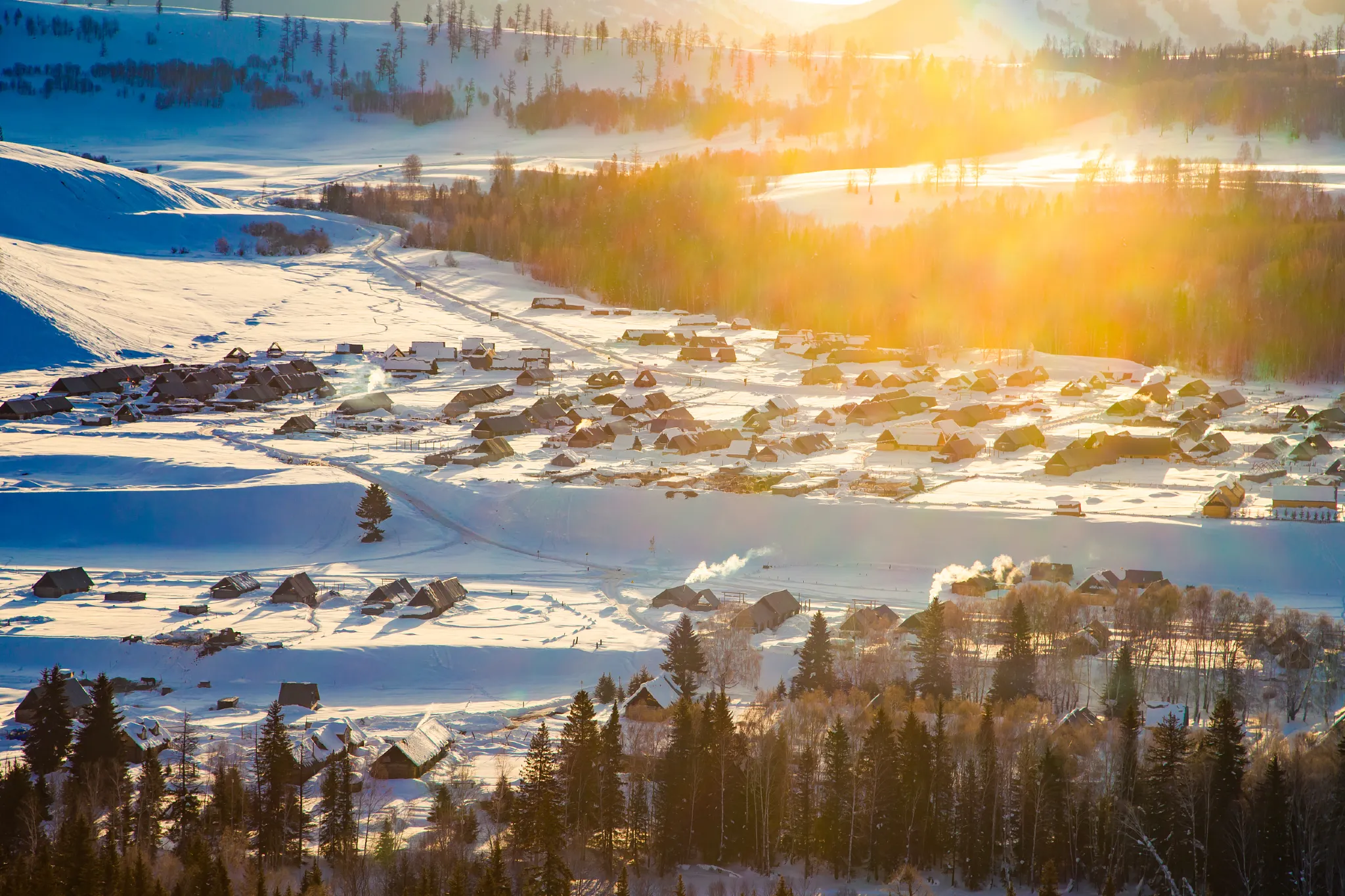
In winter the Altay region is less about "seeing the lake" and more about staying inside a snow village. Hemu's Tuwa log cabins sit under thick snow — smoke rising from chimneys, horse-drawn sleds crossing the white fields, warm lights glowing at dusk — like a scene from a storybook. Kanas Lake freezes completely; you can walk out onto the ice from the shore, and at Shenxian Bay the morning mist turns into rime on the trees at minus-twenty degrees, even more dreamlike than the autumn fog.
Winter's biggest advantage is the silence: in summer Kanas and Hemu are packed and entry is capped daily, but in winter the scenic area is quiet and cabin prices are friendlier. When the snow gets knee-deep, Hemu offers snowmobile and sled rides, and guided snowshoe walks. If you ski, Altay has some of China's best-quality powder — Hemu's Jikepulin resort and the surrounding backcountry are a real draw for experienced riders.
Sayram Lake's Blue Ice: Winter's Other Signature Scene
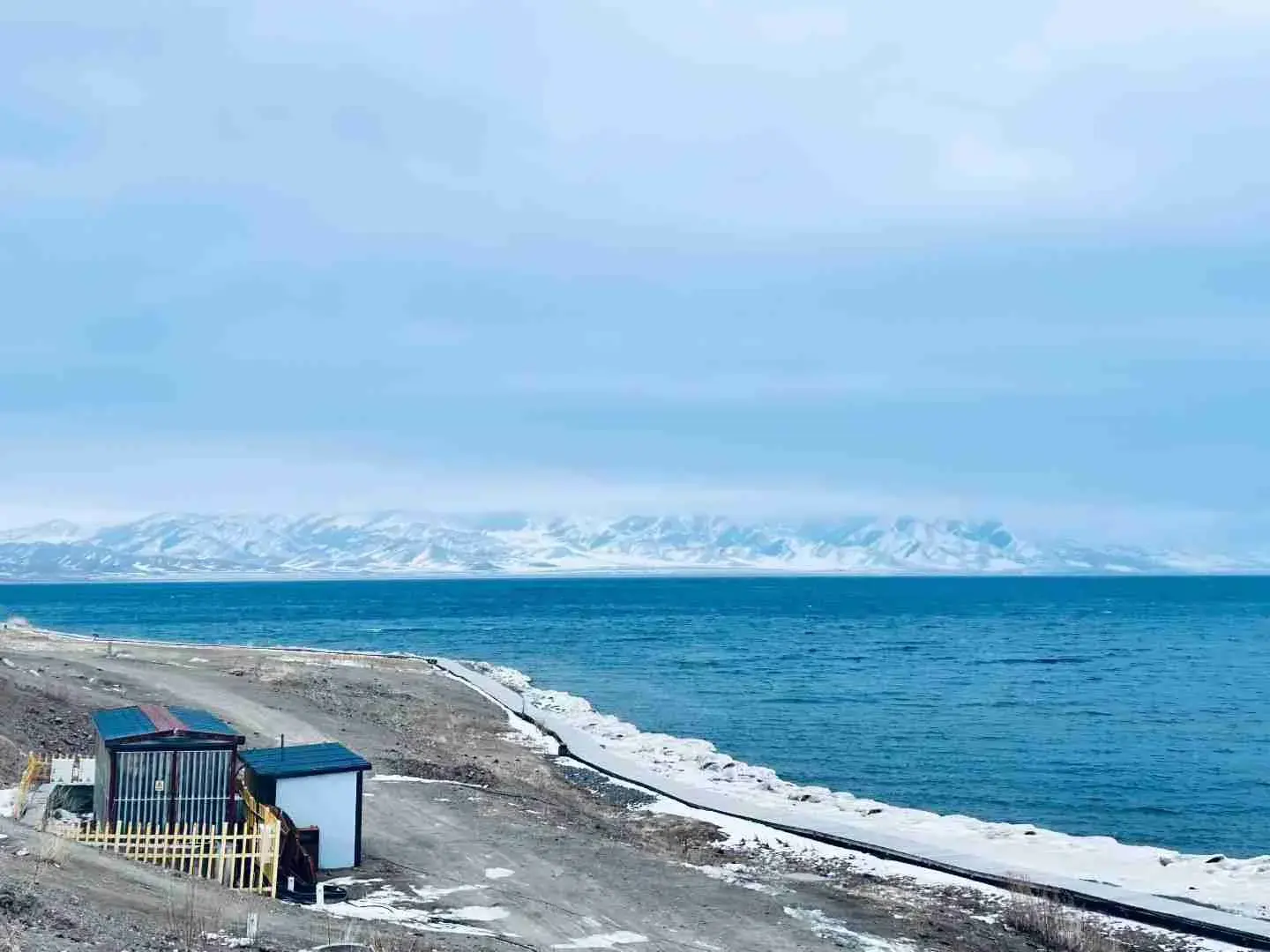
Besides Kanas and Hemu, the most photogenic winter spot is Sayram Lake in Bortala. From December to February the lake freezes completely; the ice glows blue-green in the sun, with cracks, frozen bubbles and ice-shelf ridges that photographers travel across China to shoot. The snow-capped Guozigou Bridge in the same direction is equally striking.
A note of caution: Sayram is very windy and feels far colder than the thermometer suggests in winter, and only part of the ring road is open in the coldest weeks. It is best done with a private driver or a custom itinerary arranged by people who know winter roads — not as a self-drive mission. The Duku Highway, for reference, is fully closed in winter (usually from mid-October until around May), so northern Xinjiang winter routes simply do not include it.
Southern Xinjiang in Winter: A Gentler Cold
If you are worried about the cold, or want culture alongside snow in one trip, consider southern Xinjiang. Kashgar's winter days usually hover between a few degrees above and a few below zero — far milder than Altay — and the old city's sunlight, teahouses and roast pigeon remain part of daily life in winter. The Pamir Plateau is colder; Muztagh Ata and Karakul Lake look pristine after fresh snow, but sections of the G314 depend on weather, so any winter drive up to the plateau must be confirmed for road conditions in advance.
Practical advice for Singapore travellers: for a first winter trip, pick the northern Kanas + Hemu combination — the snow density is highest. If you have already seen Xinjiang in summer, or simply prefer milder cold, Kashgar and the Pamir direction works well. To do both, fly between Urumqi and Kashgar instead of spending days on the road.
Temperatures & Packing: A Singapore First-Timer's Guide to -20°C
In Altay (Kanas, Hemu) from December to February, daytime temperatures usually sit around -10°C and nights can drop below -20°C; in Kashgar, days are around 0°C to -8°C with colder nights. Indoor spaces are heated everywhere — the cold only matters outdoors — so the trick is layering properly for outside.
The layering that first-time travellers from Singapore most often get wrong: a thermal base layer (not cotton — once it sweats it stays cold), a fleece or wool mid layer, and a windproof, waterproof down jacket on top; thermal leggings plus windproof trousers below. A hat, scarf and gloves are non-negotiable — exposed skin starts to sting within minutes at -20°C. Shoes need to be waterproof, slip-resistant winter boots with thick soles; in Hemu you can also rent snow boots locally. Hand and back warmers help a lot. Indoor-outdoor temperature swings are large, so get into the habit of layering up and down quickly.
A 7–8 Day Northern Xinjiang Winter Route
A solid northern winter route looks like this: Urumqi (rest, Grand Bazaar, a good meal) → fly or take the high-speed rail toward Altay, transfer into the Kanas scenic area for 2–3 nights (snow village, morning mist, frozen lake) → Hemu for 1–2 nights (sunrise over the village, horse sleds, optional skiing) → back through Burqin or straight to Urumqi. Seven to eight days in total is comfortable and never rushed.
In winter, lodging inside Kanas and Hemu is scarcer than in summer, so good cabins must be booked early; access into the scenic area usually involves scenic buses or arranged vehicles, with limited winter schedules. It is far easier to let a local team arrange flights, transfers and cabins as one package. For Singapore guests we normally run winter departures from mid-December through February, and can mix Kanas, Hemu, Sayram Lake or Kashgar in different combinations depending on how long your school holiday is.
Winter FAQ for Singapore Travellers
Q: Can a Singaporean handle -20°C? A: Yes, with the right layers. Only outdoor time is truly cold; rooms and vehicles are heated. What most guests find hardest is not the cold but the hassle of layering up and down.
Q: Is winter good for kids? A: Yes. Children are usually more excited about snow than adults — sledding in Hemu, snowball fights and building snowmen are great family moments. The key is waterproof snow pants and gloves so kids never end up wet and cold.
Q: Do I need a border permit in winter? A: Whether your route touches a border area and needs a permit depends on the current rules for that season; we confirm and arrange it for you before departure, so you do not need to handle it yourself.
Q: Is winter cheaper? A: Flights and some hotels cost noticeably less than the July–August peak, and the scenic areas are far emptier. Winter operations do have their own costs, so pricing follows the custom plan — just send us your dates and group size.
Want to turn this guide into your own route?
Send us your month, group size and preferred pacing. We can turn this guide into a route that fits your real trip.