Private Journeys · Western China
Yining: A City Story on the Silk Road
Yining — The "Jiangnan" Beyond the Great Wall
One-line answer
Yining nestles in the Ili River Valley of western Xinjiang, cradled by the Tianshan Mountains. As capital of the Ili Kazakh Autonomous Prefecture, it was the crucial gateway on the Silk Road's northern route, where caravans pushed westward into Central Asia and beyond. The valley's unusually moist climate — rare in arid Xinjiang — gives it lush pastures and fragrant orchards, earning it the nickname "Jiangnan beyond the Great Wall." Even better, Yining is ringed by Xinjiang's most stunning landscapes — Sayram Lake and Nalati Grassland are both within a one-to-two-hour drive, making the city a perfect home base for exploring the Tianshan wilderness.
A Brief History
The Ili region has been part of China's sphere since the Han Dynasty established the Western Regions Protectorate. It was a vital trade node on the Silk Road — Chinese silk flowed west, while Central Asian gems and spices came east. During the Qing Dynasty, Emperor Qianlong built the "Nine Cities of Ili" to secure the frontier; Ningyuan City — literally "tranquility in the far reaches" — was the predecessor of today's Yining. By the late 19th century, booming Sino-Russian trade transformed it into one of Xinjiang's first modern industrial centers, drawing Russian, Tatar, and Uzbek merchants whose influence still colors the city today. Now, Yining is a frontline port for the Belt and Road Initiative, sharing a 421-kilometer border with Kazakhstan.
Kazanqi Folk Village
This is Yining at its most enchanting, and the only in-city stop you truly need.
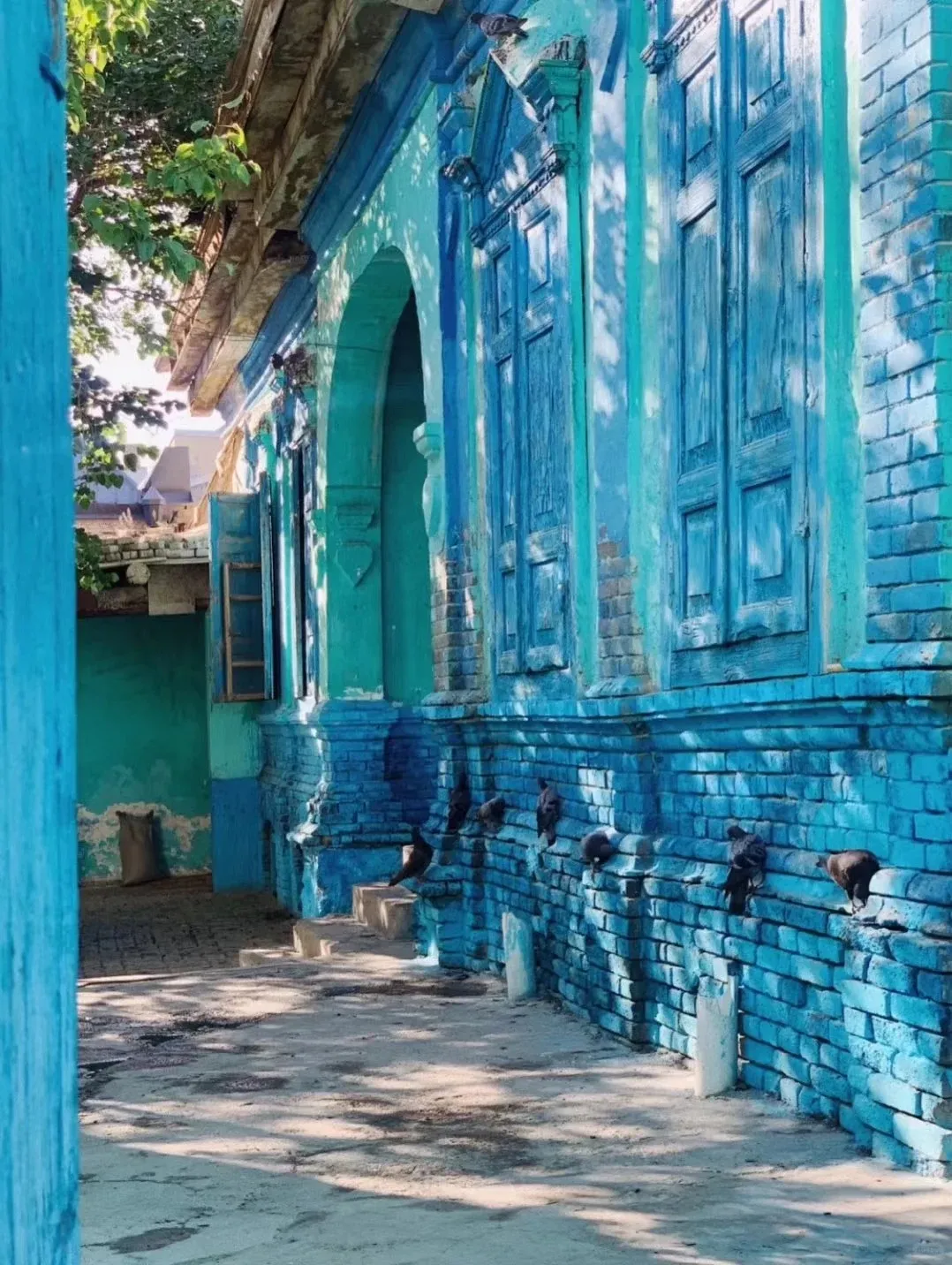
No gates, no ticket booths — Kazanqi is simply a living, breathing blue old town where over 100,000 Uyghur, Hui, and Kazakh residents still go about their daily lives. The entire neighborhood is painted in a mesmerizing "Ili blue": walls, doorways, window frames — everything glows in that dreamy hue. It feels like walking through Morocco's Chefchaouen, until the scent of milk tea and baked samsa drifting from beneath grape trellises reminds you — this is unmistakably Xinjiang.
The best way to explore is by madi (horse cart) for a few dozen yuan, clip-clopping through poplar-shaded alleys. Along the way, pop into open courtyard homes — your host will warmly offer a bowl of fresh milk tea while you sit under fruit trees and grapevines, sunlight filtering through leaves onto those famous blue walls. That sense of ease and warmth is something no ticketed attraction can replicate. If you're lucky, you might stumble right into a lively Uyghur wedding, when neighbors from the entire alley spill out to dance.
Sayram Lake
About two hours' drive from Yining, and you're standing before the "last teardrop of the Atlantic."
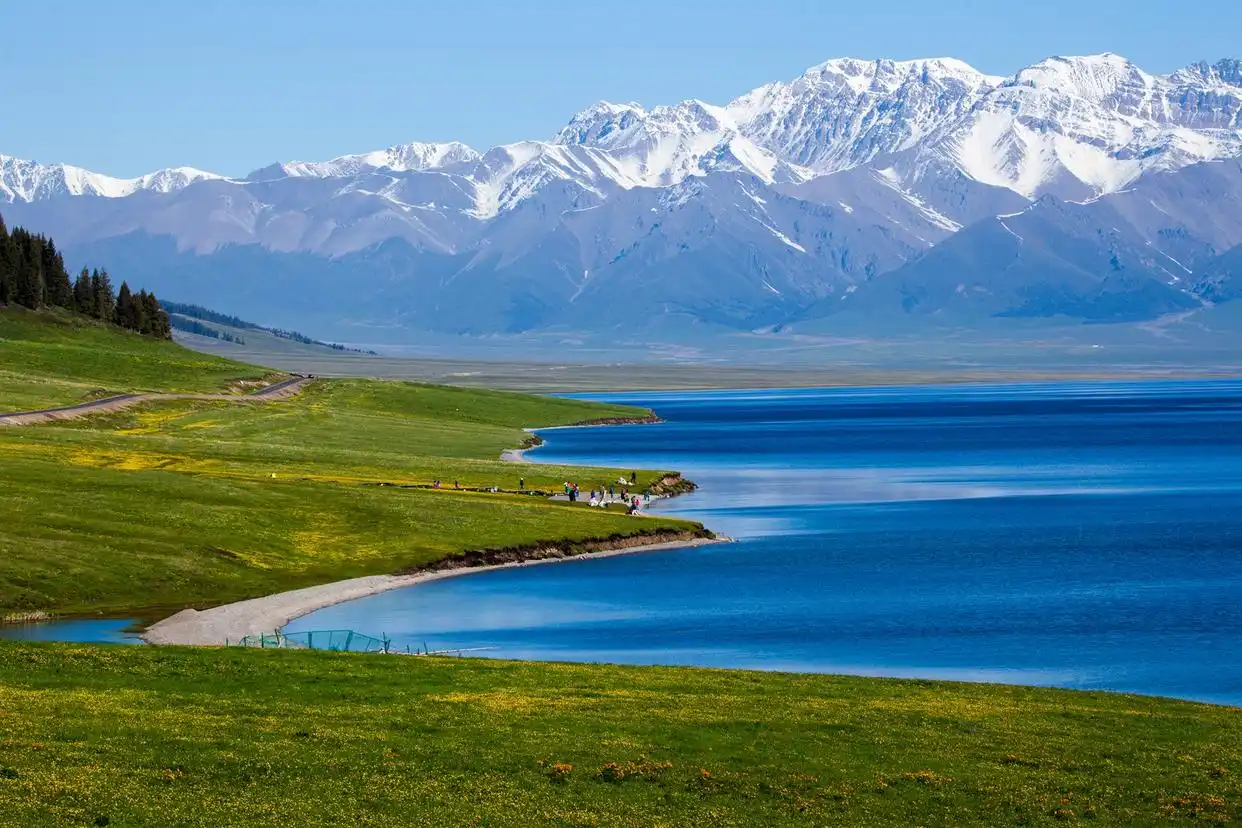
Sayram Lake is Xinjiang's highest and largest alpine lake, sitting at over 2,000 meters above sea level. Its nickname carries poetry — warm, moist air currents from the Atlantic travel over ten thousand kilometers eastward, only to be stopped by the Tianshan range and transformed into this breathtaking blue. On a clear day the water looks almost impossibly vivid, a giant gemstone cradled by snow peaks and spruce forests. The ring road runs about 90 kilometers; driving the full loop with stops takes five to six hours. Enter through the East Gate and go counterclockwise — the best sights cluster toward the end: the famous S-curve road for that snow-mountain-highway shot, Kele Yongzhu to watch swans (bring bread, they'll glide right over), and finally the wooden boardwalk at Pine Hill for a panoramic view that makes every kilometer of the journey feel earned.
If your schedule allows, spend a night lakeside. The scenic area has RV camps and stargazing domes — the Milky Way stretches across the sky at night, and you'll wake up to golden alpenglow on the peaks. That's something a day trip can never deliver. Peak season (April–October) one-day self-drive tickets are about ¥145 per person, two-day tickets ¥190; off-season discounts are significant.
Nalati Grassland
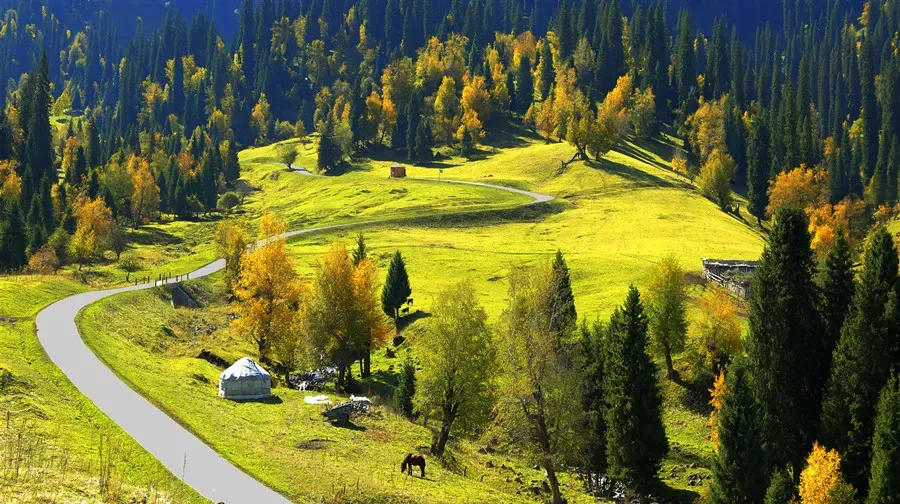
If Sayram Lake is Yining's "water," then Nalati is its "grass" — a nearly 1,000-square-kilometer alpine meadow tucked deep in the Tianshan, about three hours from the city. Its name means "the first place to see the sun" in Mongolian, and when you stand on the Sky Grassland overlook, watching morning light spill over rolling snow peaks and onto undulating pastures, the name feels exactly right.
The classic route is the "Sky Grassland" circuit — a park shuttle climbs steadily past 2,000 meters until the view suddenly opens up into a vast tableau of spruce forests, wildflower slopes, and a snow-capped horizon all at once. June through September is the prime window: the grasslands are a blanket of green, golden lotus and wild poppies fill the valleys, Kazakh herders' yurts dot the landscape, and cattle and sheep graze quietly across the hillsides. Peak-season entry is about ¥100 per person (April–October), plus ¥50 for the shuttle. The town of Nalati just outside the park offers plenty of accommodation — book ahead in peak season. And the day-night temperature swing here is even more dramatic than in Yining proper: even in July, pack a light down jacket or windbreaker.
Travel Smart
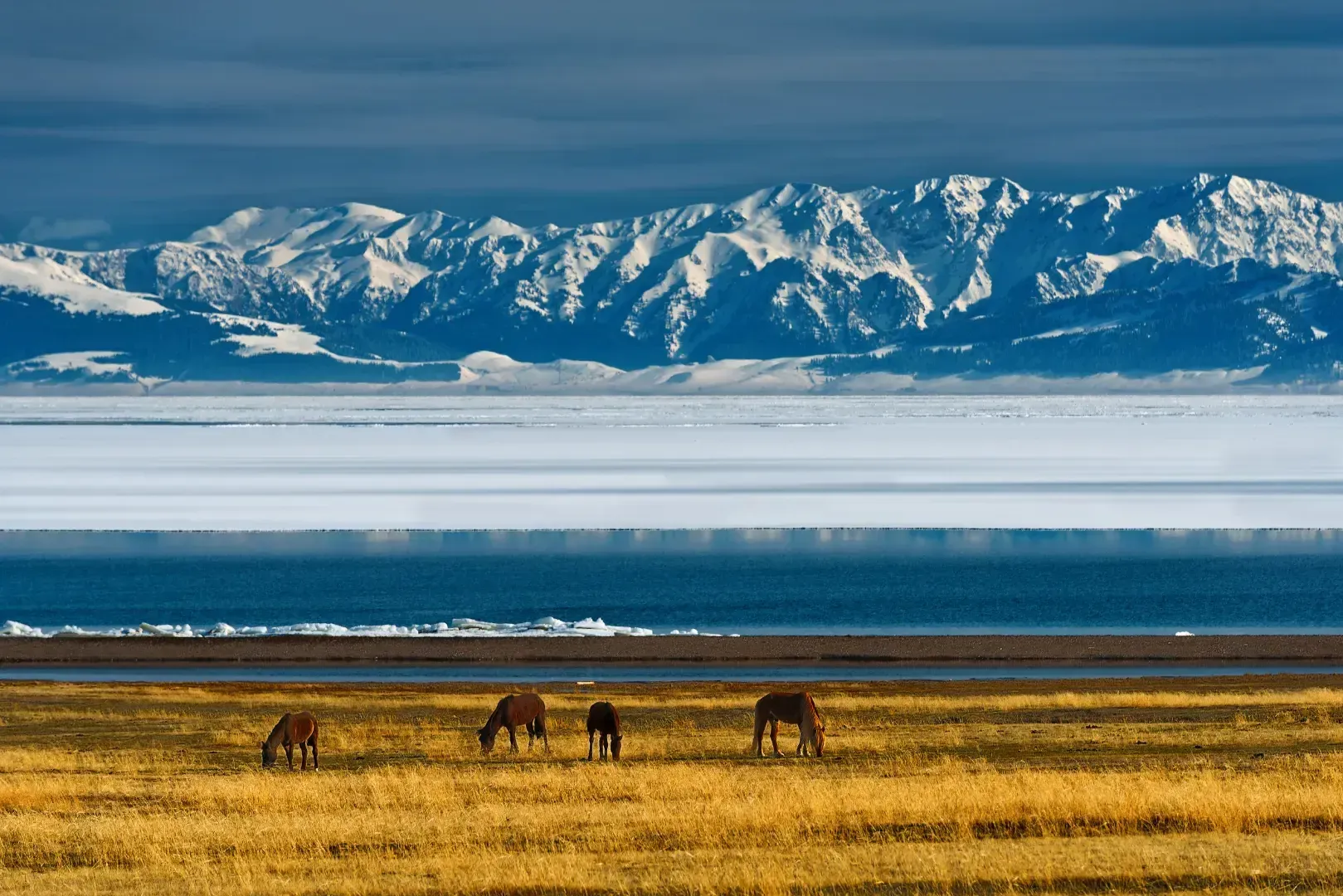
July through October is prime — cool, moist summers (15–28°C average) with emerald grasslands and ripe melons; autumn paints the Ili Valley gold. May–June is also lovely with fewer crowds and cheaper lodging; the lavender fields in Huocheng (only an hour from Yining) peak in mid-to-late June. Winter transforms Sayram into a frozen wonderland, but temperatures can hit -20°C — best for the cold-hardy adventurer.
The day-night temperature swing is real. Summer days are T-shirt weather; come sundown, you'll want a jacket. Sayram Lake sits above 2,000 meters and the wind off the water bites — bring a windbreaker or light down layer even in midsummer. The "onion method" is your friend: T-shirt, sun shirt, and a shell layer, peel on and off as needed. Hat, sunglasses, and SPF 50+ sunscreen are non-negotiable year-round.
Gulandam handmade ice cream on Liuxing Street is legendary — impossibly creamy, worth every minute in line. Kazanqi's samsa, polo, and kebabs speak for themselves, but don't miss Yining's smoked horse meat and sausage, a local specialty. On a hot day, nothing beats suzme doghap (yogurt shaved ice) from the night market — pure, icy bliss. Food options inside Sayram Lake are limited and pricey, so pack snacks and water in the car, or eat before entering.
Yining is compact — 15 minutes by taxi between Kazanqi and Liuxing Street. Sayram Lake is about two hours by car; self-driving or hiring a car is highly recommended — the park allows private vehicles on the ring road, far better than the shuttle. Nalati is about three hours away, and the Ili Valley scenery along the way is its own reward. Keep your ID on you at all times — checkpoints across Xinjiang will ask for it. Cell signal is patchy in the mountains, so download offline maps ahead. And book accommodation at least a week in advance during peak season — rooms fill up fast.
Yining's beauty isn't in grand monuments — it's in the scent of milk tea drifting from a blue alley, in the golden alpenglow greeting you at your Sayram Lake window, in the first ray of sunlight falling across a Nalati meadow. The camel bells of the Silk Road may be long gone, but life in this Tianshan river valley still unfolds, beautifully, every single day.
Want to turn this guide into your own route?
Send us your month, group size and preferred pacing. We can turn this guide into a route that fits your real trip.