Private Journeys · Western China
Halal Food in Xinjiang | Muslim-Friendly Guide
Why Xinjiang is one of the most halal-friendly regions in China — what to eat, how to find it, and where to pray.
One-line answer
Xinjiang is one of the most halal-friendly regions in China: nearly all local Uyghur, Hui, Kazakh and Kyrgyz restaurants serve halal food by default, and the halal sign (清真) marks them clearly. Kashgar is also home to China's largest mosque, open free of charge to Muslim visitors.
Short Answer: Halal Is the Default, Not the Exception
For Muslim travelers, Xinjiang may be the most worry-free destination in all of China. Local Uyghur, Hui, Kazakh and Kyrgyz cuisine revolves around beef, mutton, noodles and dairy, and the vast majority of restaurants are halal by default — most display a halal sign (清真) at the entrance.
In Urumqi, Kashgar and the towns along every route, virtually every local restaurant serves halal food, with far more choice than inside scenic areas. You rarely need to hunt for options: look for the sign, walk into a local restaurant, and you are almost always fine.
Halal by Default vs Officially Certified
Most restaurants in Xinjiang are halal by default: run by Muslim owners, with ingredients and processes that naturally meet halal requirements. Xinjiang and Ningxia also operate some of the strictest halal certification systems in China.
If you are ever unsure — for example at a mixed Chinese restaurant or a chain — just ask; places displaying the halal sign are safe. If you need a stricter standard such as official certification, tell us and we will arrange certified halal restaurants.
Must-Try Dishes
Pilaf (zhua fan): mutton, carrots and rice slow-cooked together — Xinjiang's signature one-plate meal.
Lamb kebabs: grilled over charcoal with cumin and chilli — the must-order at any night market.
Hand-pulled noodles (laghman): served with stir-fried toppings; portions are big enough to share.
Naan and baked buns: naan is the all-purpose staple, and baked buns are crisp outside and juicy inside.
Yogurt and fruit: perfect for cooling down — Hami melons and grapes are nature's dessert for kids.
Dining Etiquette — A Few Simple Rules
Inside halal restaurants, no pork, no alcohol — and do not bring either inside. Never ask the staff if pork is served; in local culture it is considered deeply offensive.
The food is rich and oily, which can cause what locals call 'internal heat' — bring digestive tablets and vitamins, drink plenty of water and eat fruit.
Portions are large everywhere; order less per person and add more later rather than wasting food.
Alipay and WeChat Pay work in cities and scenic areas; keep a little cash for small roadside shops.
Where to Eat: Urumqi, Kashgar & On the Road
Urumqi: around the International Grand Bazaar and local neighbourhoods the choice is huge, from traditional pilaf to halal Chinese chains — one of the few cities in Xinjiang with real culinary variety.
Kashgar: the old city and bazaars have the highest density of halal food in the region — naan ovens, baked buns and yogurt drinks on nearly every corner, plus lively night markets.
Towns along the route (Yining, Nalati, Bayinbuluke): local restaurants are halal by default, but the choice is smaller than in cities, so stock up on fruit and snacks before leaving town.
Inside scenic areas: options are limited and prices higher; tell us in advance and we will arrange suitable halal restaurants along the route.
Prayer & Mosques
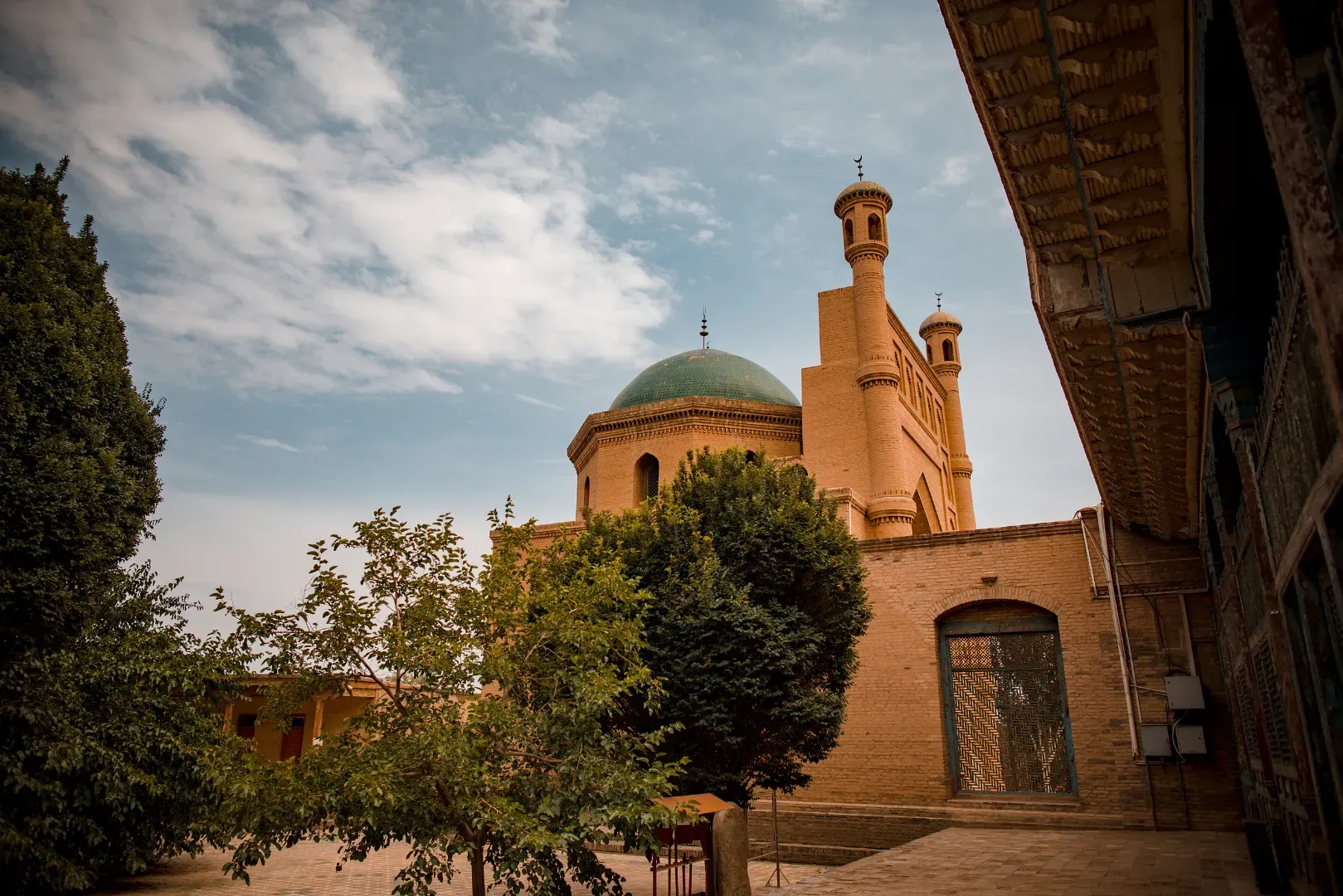
Id Kah Mosque in Kashgar is the largest mosque in China; Muslim visitors may enter free of charge to pray. During opening hours non-Muslims are welcome to tour the courtyard respectfully, observing dress rules.
Beyond Id Kah, Kashgar's old city is dotted with smaller mosques, and Urumqi and other major towns also have mosques — use a map app to find the nearest prayer place.
Dress: women should wear long trousers or dresses with shoulders and back covered; men should avoid shorts. Remove shoes before entering the prayer hall, stay quiet and do not photograph without permission.
A Note for Singapore & Southeast Asian Muslim Travelers
If you have tried Xinjiang food in Singapore — Aisyah near Haji Lane, Yi Zun Noodle at Joo Chiat, Afanti — the real thing is even better. The difference is that 'halal' here is a cultural default rather than an official certificate on every door.
If you need a stricter certified standard, just tell us — we work with certified halal restaurants and can build prayer times into the itinerary.
Frequently Asked Questions
Q: Is all Xinjiang food halal? A: The vast majority of local restaurants are halal by default — look for the halal sign; confirm at mixed Chinese restaurants.
Q: Can I find officially certified halal restaurants? A: Yes. Xinjiang and Ningxia run some of China's strictest halal certification; certified restaurants can be arranged in advance.
Q: Can Muslim travelers pray at mosques? A: Yes. Id Kah Mosque in Kashgar is free for Muslims, and Urumqi and other cities also have mosques.
Q: Are there vegetarian options? A: Limited but possible — vegetable noodles, stir-fried dishes and egg dishes can be requested; let us know and we will arrange accordingly.
Q: Can prayer times be built into the itinerary? A: Absolutely — tell us your needs and we will plan meals and prayer stops into the route.
Let Us Handle the Halal Details
Tell us your dietary requirements (halal, certification needs, vegetarian or allergies), travel month and group size, and we will reply within 24 hours with a route plan including halal restaurants and prayer stops.
Halal food in Xinjiang is easy to find; what takes care is planning every meal and the daily rhythm — and that is exactly what we do.
Want to turn this guide into your own route?
Send us your month, group size and preferred pacing. We can turn this guide into a route that fits your real trip.